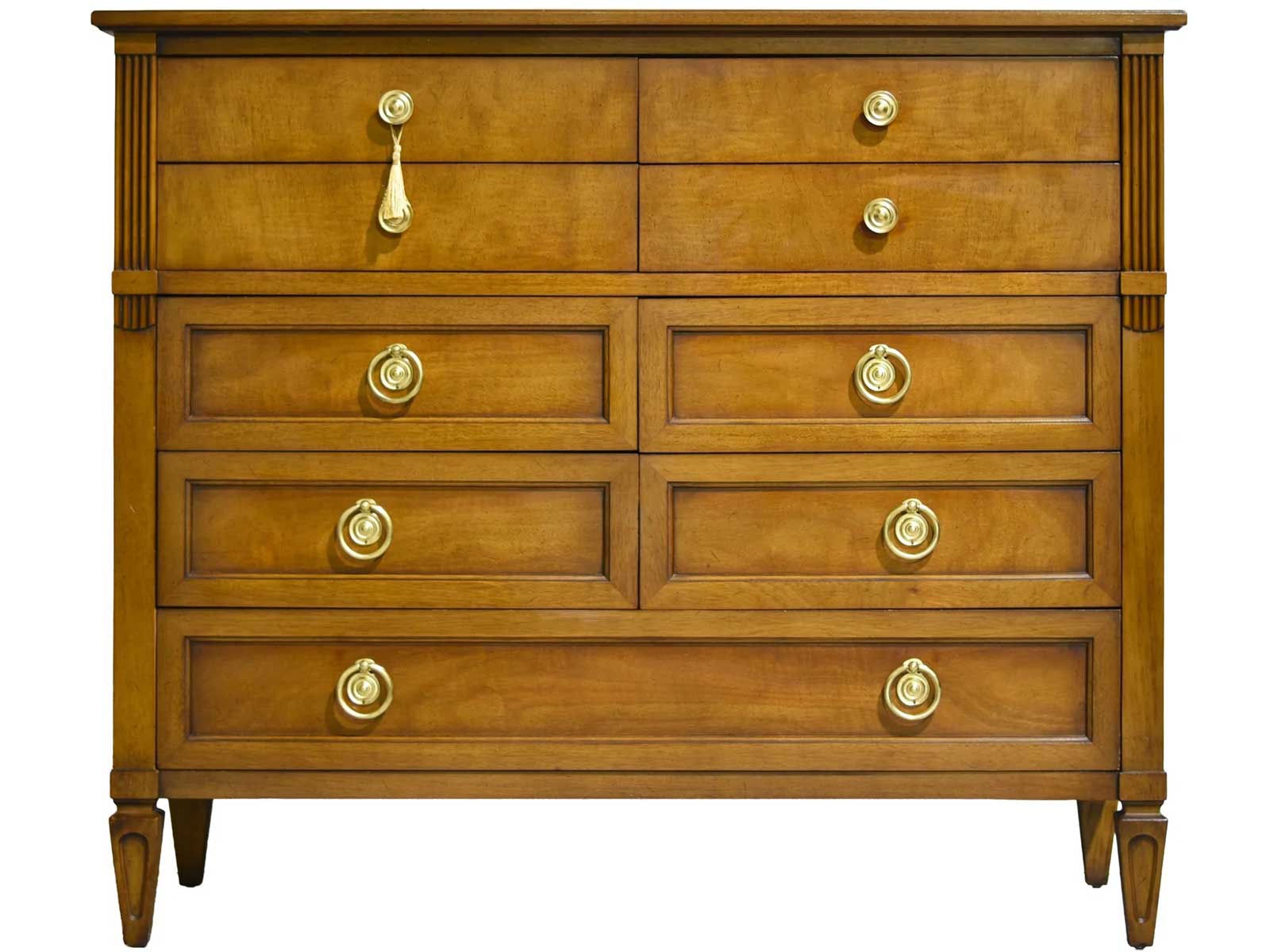
Henredon and Drexel show up constantly in vintage furniture searches, and for good reason — both were major American manufacturers producing genuinely well-built case goods through the mid-20th century, and both left behind a large enough body of work that pieces are still widely available. But "made by Henredon" or "made by Drexel" isn't a single quality guarantee on its own; both companies produced across a huge range of lines and eras. Here's what actually separates a great find from a merely decent one.
"A maker's name gets you in the door — it's the line, the construction, and the condition that tell you whether to buy."
Why these two names matter
Both companies were large-scale American manufacturers, not boutique workshops, which means quality control and design varied significantly by decade and by line:
- Henredon is known for high-end case goods and upholstery, with standout mid-century lines like Scene One (campaign-style) and later Asian-influenced Pan Asian collections — generally positioned at the premium end of the American furniture market.
- Drexel produced across a wider range of price points, with the Drexel Heritage and Declaration lines being especially collectible today for their clean mid-century lines and solid construction.
- Both companies changed hands and quality over time. Earlier production (roughly 1950s–1970s) is generally considered the strongest era for both — later output can be inconsistent.

How to verify what you're actually looking at
Find the label or stamp. Most authentic pieces have a maker's label, branded stamp, or metal tag inside a drawer or on the back panel — look before you buy, since labels are the fastest way to confirm origin over a seller's word alone.
Check the line name, not just the brand. "Henredon" alone tells you less than "Henredon Scene One" or "Drexel Declaration" — the specific line usually tells you the era, designer, and general quality tier at a glance.
Look at joinery. Dovetailed drawers, solid wood drawer sides (not stapled particleboard), and evenly aligned doors are good signs regardless of maker — these companies used real joinery in their better lines, and its presence is a strong quality signal on its own.
Weight is a tell. Genuine solid-wood construction from this era tends to be noticeably heavier than modern reproduction furniture — if a "vintage" piece feels suspiciously light, look closer at the materials before trusting the label.
Condition issues worth knowing about
Veneer lifting or bubbling. Common on pieces that saw sun or humidity exposure — usually repairable, but factor the cost into your offer.
Hardware replacement. Original hardware adds value and authenticity; missing or mismatched pulls are a common (and usually fixable) issue, but worth confirming before you buy if originality matters to you.
Refinishing history. A well-done professional refinish isn't a dealbreaker and can actually make a piece more livable — but ask directly, since some sellers won't volunteer it.
A note for designers sourcing for clients
Both Henredon and Drexel pieces photograph beautifully and read as investment-grade to clients who recognize the names — but the real value case rests on line and condition, not the brand alone. Worth including the specific line name in any documentation you provide, since it gives the piece a stronger provenance story than "vintage Drexel" on its own.
Firebird Furniture sources vintage Henredon and Drexel pieces, including options available through our Paint to Order program.