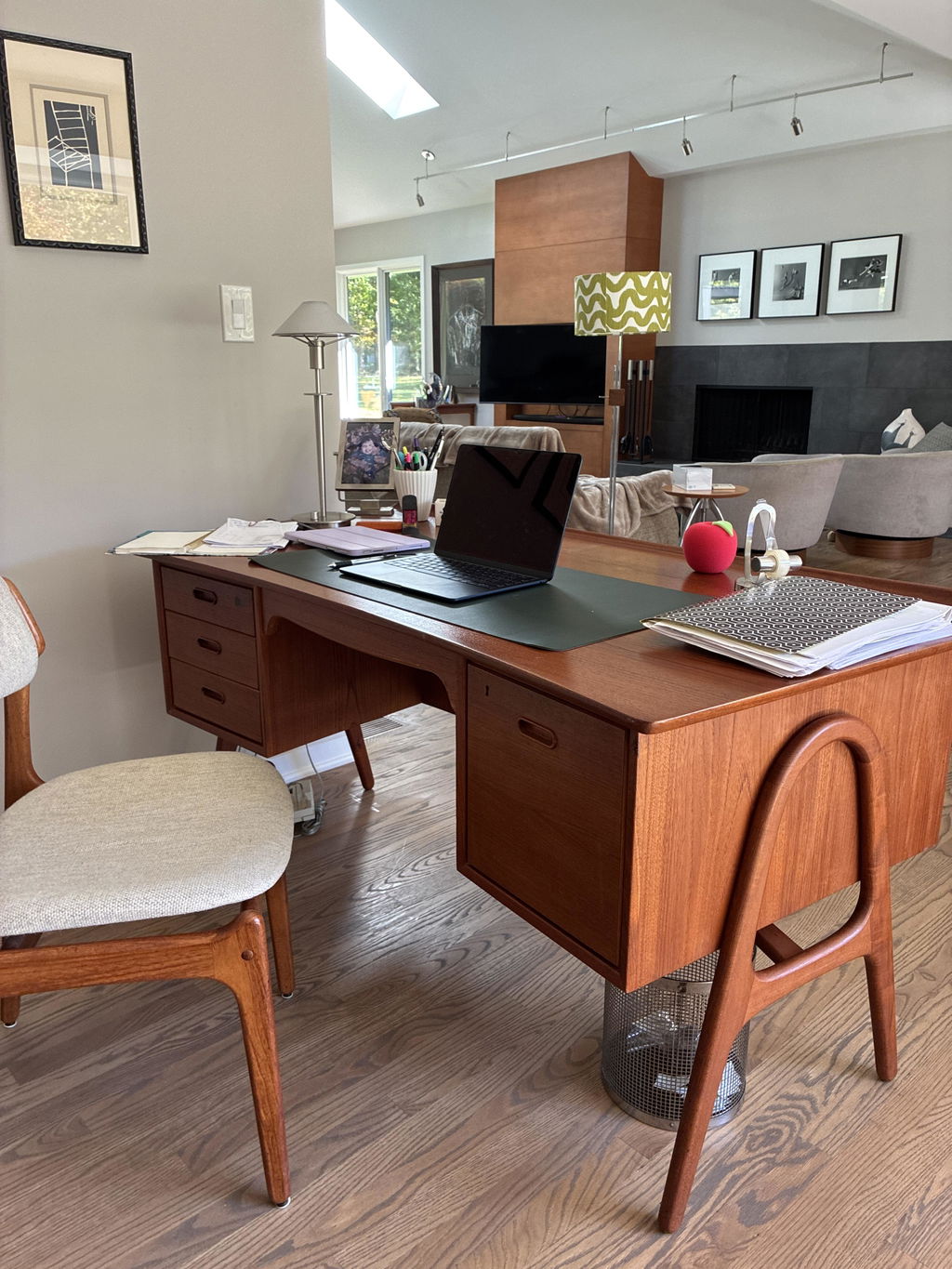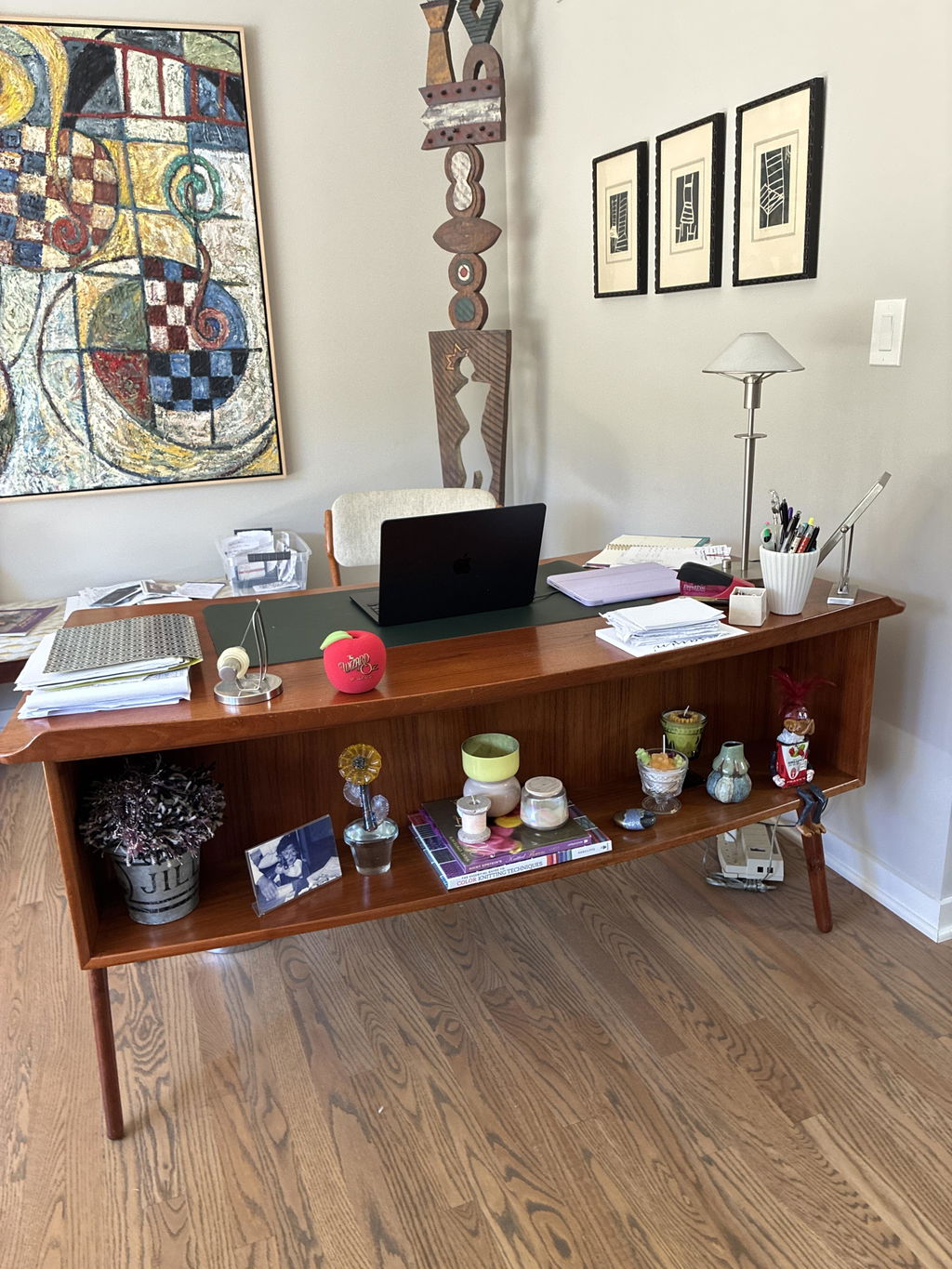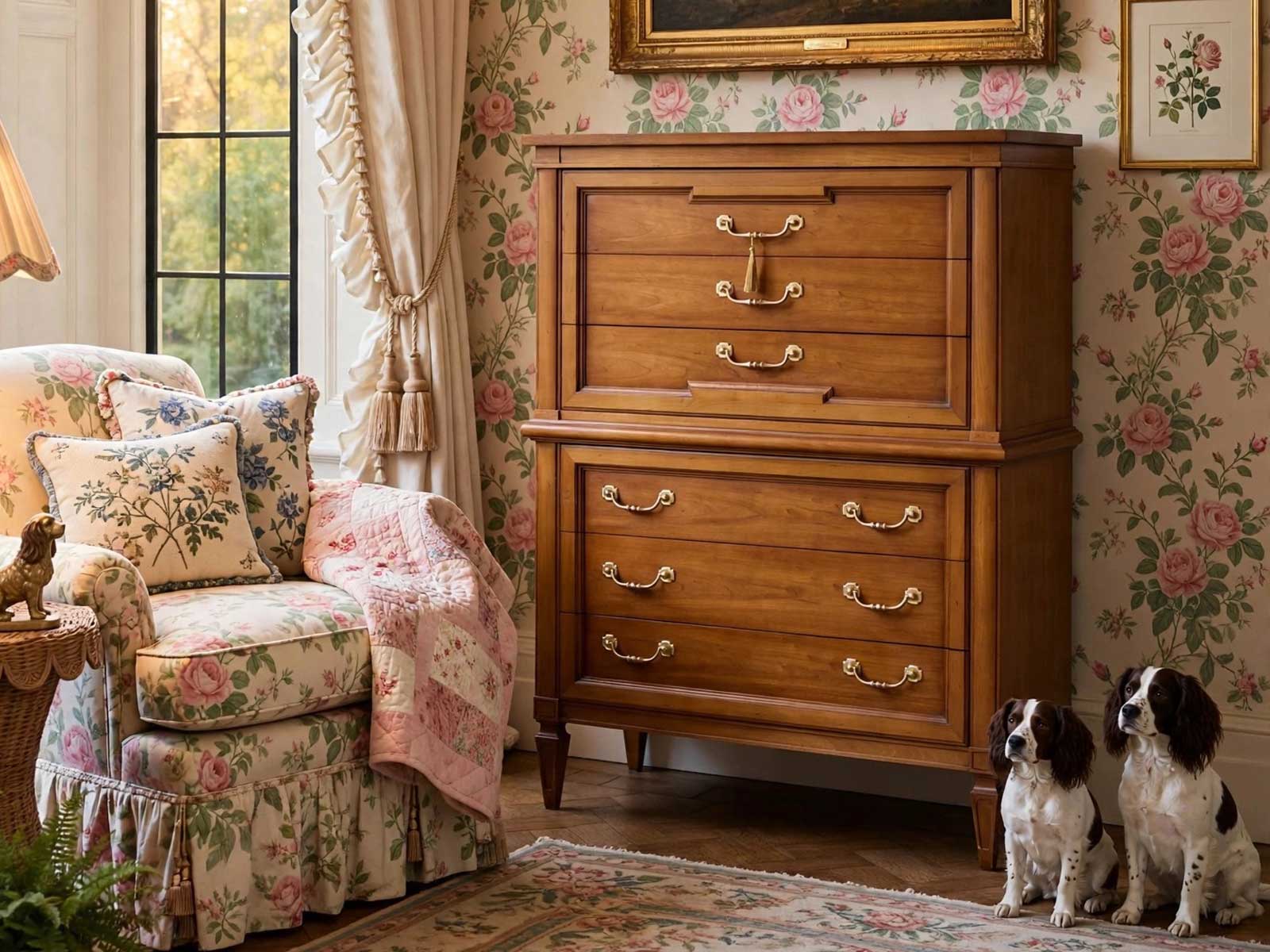
"Dresser" and "chest of drawers" get used interchangeably so often that most people assume they're just two names for the same piece. They're not — and knowing the difference matters more than it seems, especially when you're shopping vintage and trying to picture how a piece will actually sit in a room. Here's what actually separates them.
"Both hold clothes. Only one is built to be low and wide — the other is built to go up."
The core difference: proportion
A dresser is low and wide. Traditionally built with a horizontal orientation — wider than it is tall — a dresser typically runs two to four drawers high and often includes a mirror pairing. This shape comes from its original use as a dressing surface, not just storage: the top was meant to be used, with a mirror, jewelry box, or vanity items on it.
A chest of drawers is tall and narrow. Built vertically, a chest of drawers stacks four to seven (sometimes more) drawers on top of each other in a smaller footprint. It's built purely for storage, not for a usable top surface — it's meant to go against a wall and be opened, not sat in front of.

Where each one works best
Dresser:
- Primary bedroom, where floor space is available and a mirror pairing makes sense
- Rooms doubling as a dressing area — the top gets used daily
- Wider walls where a low, horizontal piece reads better than something tall
Chest of drawers:
- Smaller bedrooms or guest rooms, where footprint matters more than surface area
- Narrow wall sections between windows or doors
- Anywhere you need maximum storage without giving up floor space
A quick way to tell them apart while shopping
Count the drawers relative to height. If the piece is roughly as tall as it is wide (or wider), it's a dresser. If it's noticeably taller than it is wide, it's a chest of drawers.
Check for a mirror pairing. Dressers were often sold or designed with a matching mirror; chests of drawers rarely were — there's no top surface meant for one.
Look at the drawer count. Six drawers spread across a wide, low case is a dresser. Six drawers stacked in a narrow tower is a chest of drawers (sometimes called a "chest on chest" or "tallboy" in older or English pieces).
Terminology gets murkier with vintage pieces
Vintage and antique listings aren't always consistent — you'll see "chest of drawers" used loosely for pieces that are really dressers, and vice versa, especially in older or British-influenced naming conventions (where "chest of drawers" is often used as the general term for both). When shopping vintage specifically, go by the proportions and drawer count rather than trusting the listing title alone.
A note for designers sourcing for clients
When specifying for a client, the distinction is worth calling out explicitly rather than assuming the room dictates it — a client picturing "a dresser" for a small guest room may actually need the footprint of a chest of drawers, and vice versa for a primary suite with wall space to spare. Measuring the wall first and matching proportion second avoids a piece that's technically lovely but wrong for the space.
Firebird Furniture sources vintage dressers and chests of drawers, including options available through our Paint to Order program.