Credenza and sideboard get used interchangeably by almost everyone who isn't a furniture dealer — and honestly, that's fine most of the time. But the two terms do point to real differences in origin, proportion, and function, and knowing which is which helps you search smarter and spot the right piece faster.
"The names describe two different jobs — one for serving, one for storing — even when the silhouettes end up looking nearly identical."
Where the names come from
Both terms describe a long, low case piece meant to sit against a wall, but they come from different traditions:
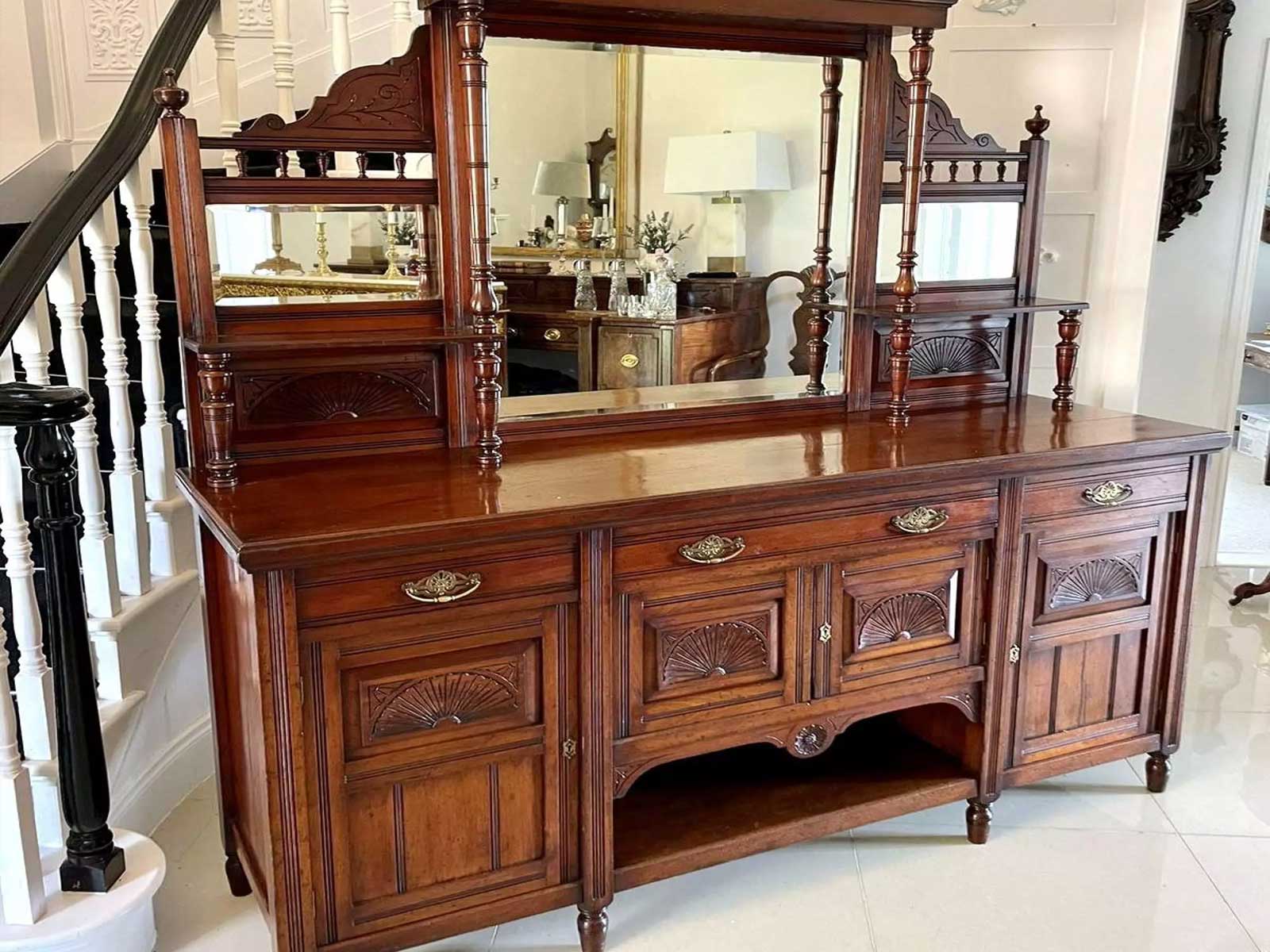
- Sideboard has English dining-room roots — historically used for serving, with a surface height built for setting down dishes and linens during a meal.
- Credenza comes from Italian furniture tradition and originally referred to a lower, more minimal storage piece — the word itself relates to "belief" or "trust," tied to its early use for tasting food before it was served.
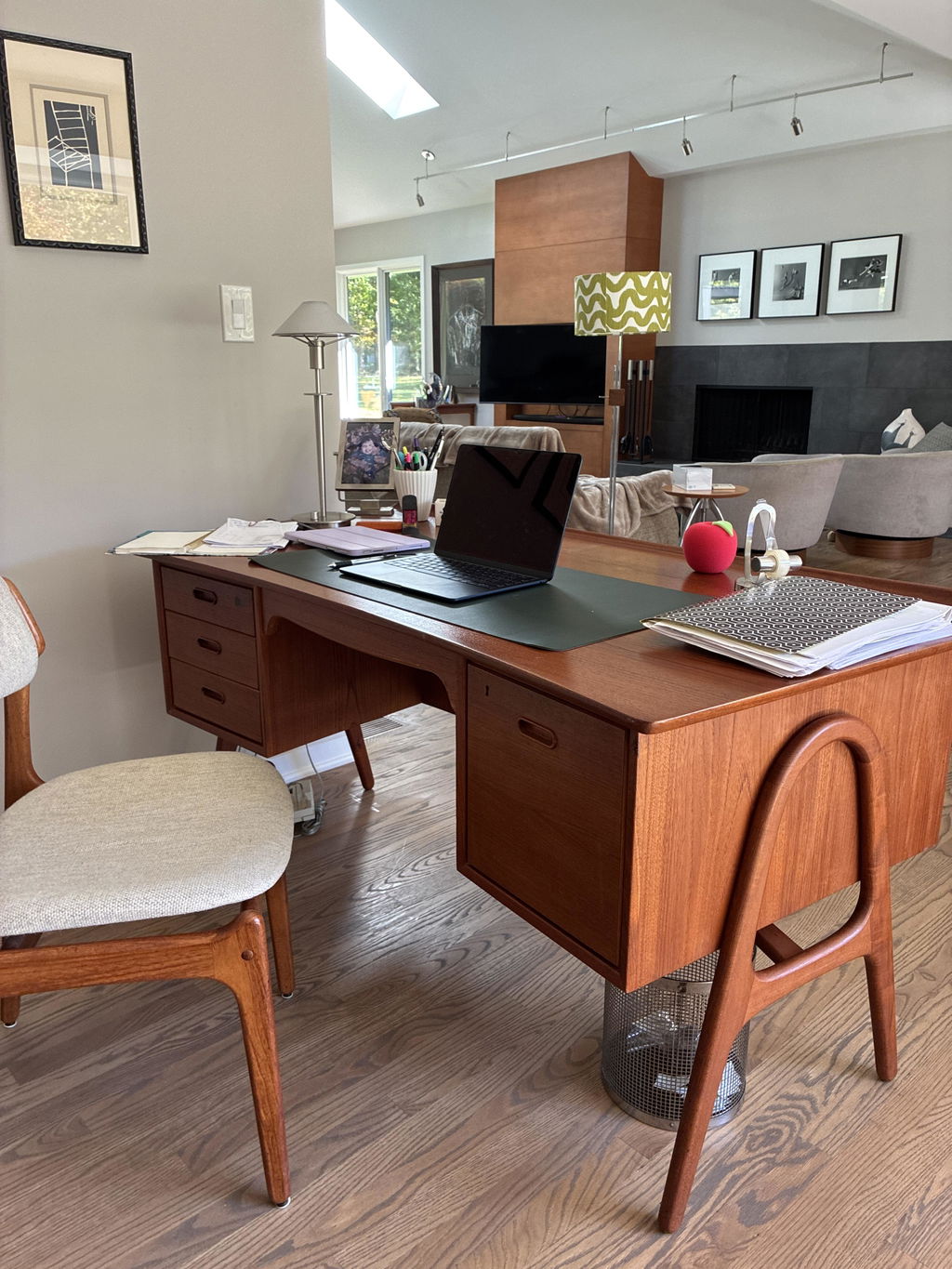
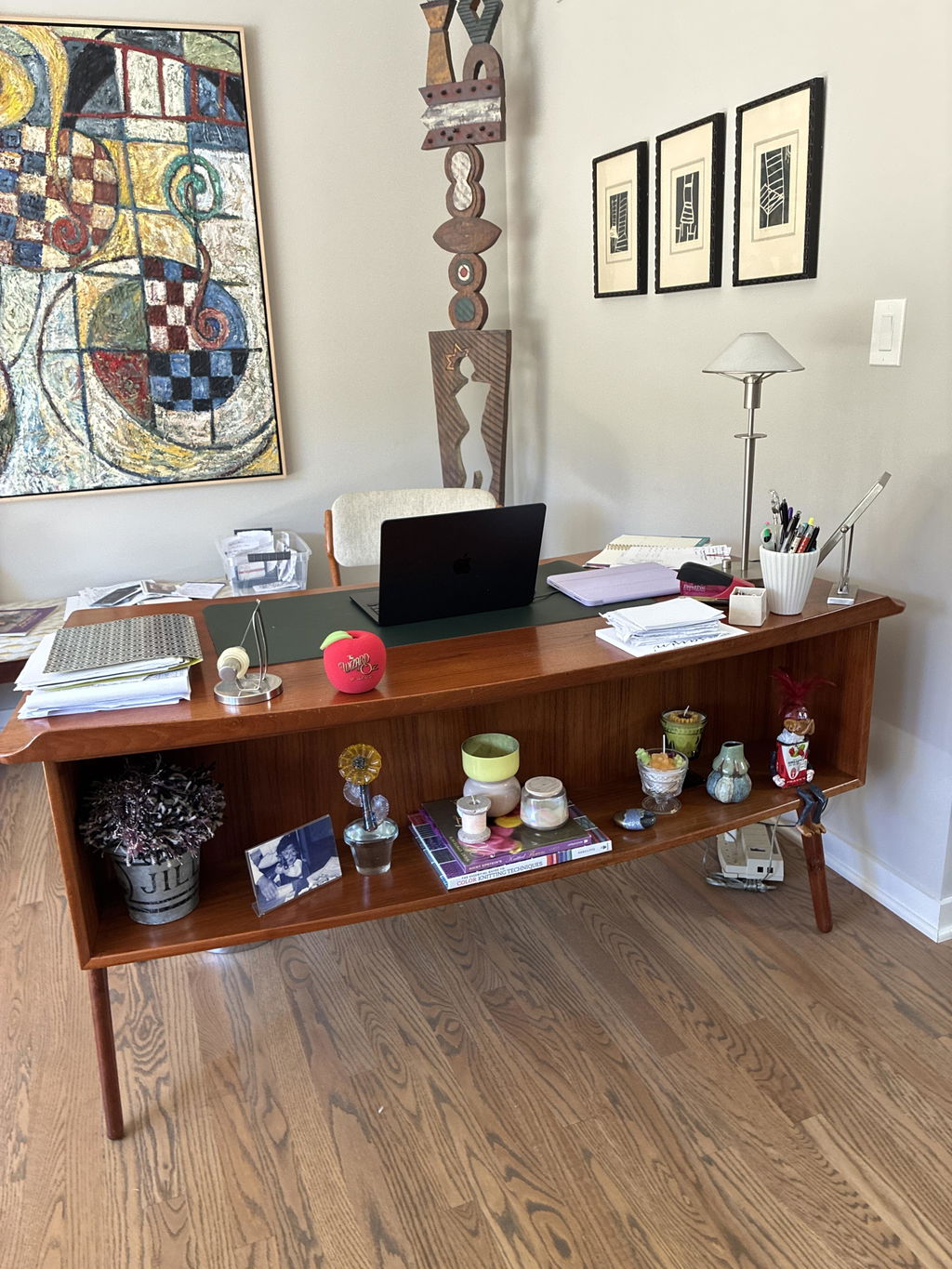
- Mid-century use blurred the line. By the 1950s–1960s, American and Scandinavian designers used both terms fairly loosely for the same general form — long, low, often with tapered legs — so today the labels overlap more than they differ.

Practical differences worth knowing
Height and proportion. Sideboards tend to sit slightly taller, closer to standing serving height. Credenzas often run lower and longer, sometimes closer to the ground, with a more horizontal emphasis.
Interior configuration. Sideboards more commonly include a mix of drawers and cabinet doors, built for linens, silver, and serving pieces. Credenzas often lean toward open shelving or simple cabinet doors, since the original use was general storage rather than dining service specifically.
Legs and base. Mid-century credenzas frequently sit on slim tapered or hairpin legs, giving a lighter, more "floating" look. Traditional sideboards more often sit closer to the floor on a plinth base or short feet.
Room placement. Sideboards are still most associated with dining rooms. Credenzas show up just as often in living rooms, home offices, or as media consoles — the form translates easily outside the dining context.
Why it matters when you're sourcing
If you're searching listings or working with a dealer, using the more specific term narrows results meaningfully — searching "credenza" tends to surface more mid-century and Scandinavian pieces, while "sideboard" leans toward traditional and English styles. Neither search is wrong, but knowing the distinction helps you filter faster instead of scrolling past pieces that don't match what you actually pictured.
A note for designers sourcing for clients
When specifying for a client, it's worth using whichever term matches the room's overall style language — "credenza" reads as more contemporary and design-forward, while "sideboard" signals traditional or transitional. The distinction can subtly set expectations before the piece even arrives.
Firebird Furniture sources both vintage credenzas and sideboards, with Paint to Order available on select pieces.