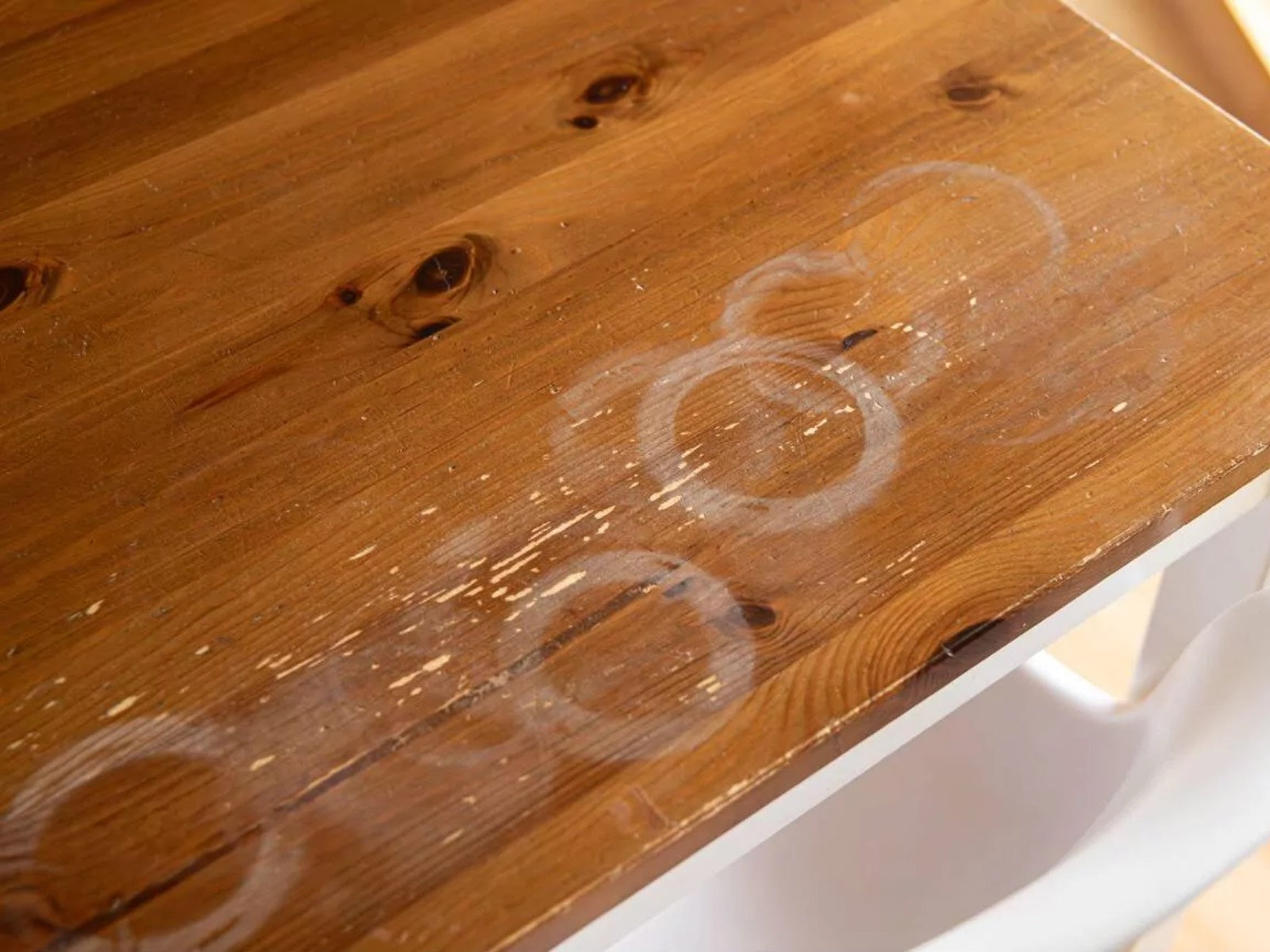
Almost every vintage piece that's lived in a real house has a mark on it somewhere — a coffee cup set down without a coaster, a hot dish straight off the stove, a cold glass sweating onto a tabletop overnight. Most of the time it looks worse than it is. The trick is knowing which marks are cosmetic and which ones mean the water actually won.
"The color of the stain tells you almost everything — white means it's sitting on top of the finish, dark means it's already inside the wood."
White vs. dark: why the color of the mark matters
A cloudy white or gray ring means moisture got trapped in the finish itself — the lacquer, varnish, or wax layer — without reaching the wood underneath. It looks alarming, but it's genuinely surface-level damage, and it's the version worth trying to fix yourself.
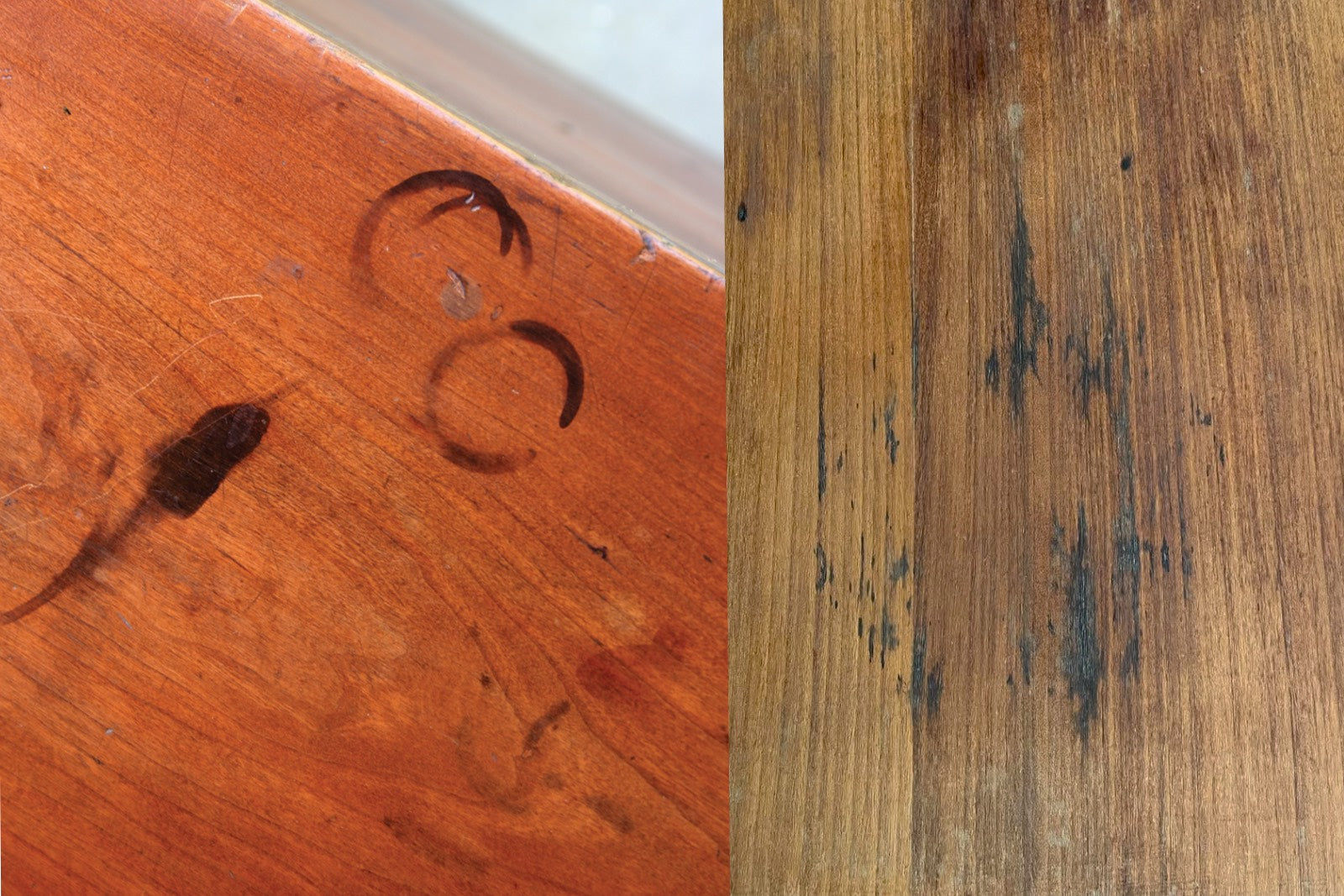
A dark brown or black stain is a different problem entirely. That color means water pushed through the finish and into the wood fibers, sometimes reacting with tannins in the wood itself. It's not a finish problem anymore, it's a wood problem, and it isn't coming out with a cloth and some patience.
What actually works on a white ring
For genuinely surface-level marks, a few methods work reliably without touching the finish underneath:
- A warm iron over a cloth. Set an iron to low heat, place a clean cotton cloth over the mark, and press for a few seconds at a time, checking often. The gentle heat re-melts the trapped moisture out of the finish. Never use a hot iron directly on the wood, and never skip the cloth.
- Mineral spirits on a soft cloth. A light, even wipe can lift a white ring without disturbing the finish around it — test on a hidden spot first, since results vary by finish type.
- A finish restorer product (sold specifically for this, applied with fine 0000 steel wool or a soft cloth, then followed with a wax or oil finish) is the most consistent option if the iron method doesn't fully clear it.
You'll see mayonnaise and toothpaste recommended constantly for this exact problem, and they can work on tough modern lacquer. We'd skip both on anything genuinely vintage — toothpaste is a mild abrasive, and older finishes like shellac are softer and more reactive than what these folk fixes were designed for. The risk of dulling or clouding an original finish isn't worth it for a fix that isn't guaranteed to work anyway.
When it's beyond a home fix
Hand a piece to a restorer rather than experimenting further when:
- The stain is dark, not white — meaning it's in the wood, not the finish
- The piece is a genuine antique or otherwise valuable, where a failed attempt could cost more than the fix
- You've already tried a gentle method and the mark hasn't budged
- The mark covers a large area or sits on veneer, where sanding risks going straight through to the substrate
A professional refinish on a dark stain usually means careful sanding down to the affected wood and reapplying a matched finish — not a quick fix, but the only real one once water has actually gotten into the wood.
A note before you reach for anything
Always test on a hidden spot first — the underside of a leaf, the back of a drawer front, anywhere that won't show if it goes wrong. Every one of these home methods can react differently depending on the specific finish, and there's no way to know which you're dealing with just by looking at it.
Firebird Furniture restores pieces with an eye for what's actually worth saving versus what's just cosmetic.