Every restoration starts with the same fork in the road: paint or clearcoat. It's not a stylistic coin flip — the wood underneath, the piece's original construction, and how the finish will actually hold up in a real home all point toward one answer over the other. We get asked about this more than almost anything else, so here's how we actually make the call on a given piece.
The finish isn't decoration on top of the piece — it's a decision about the piece.
What clearcoat preserves that paint can't
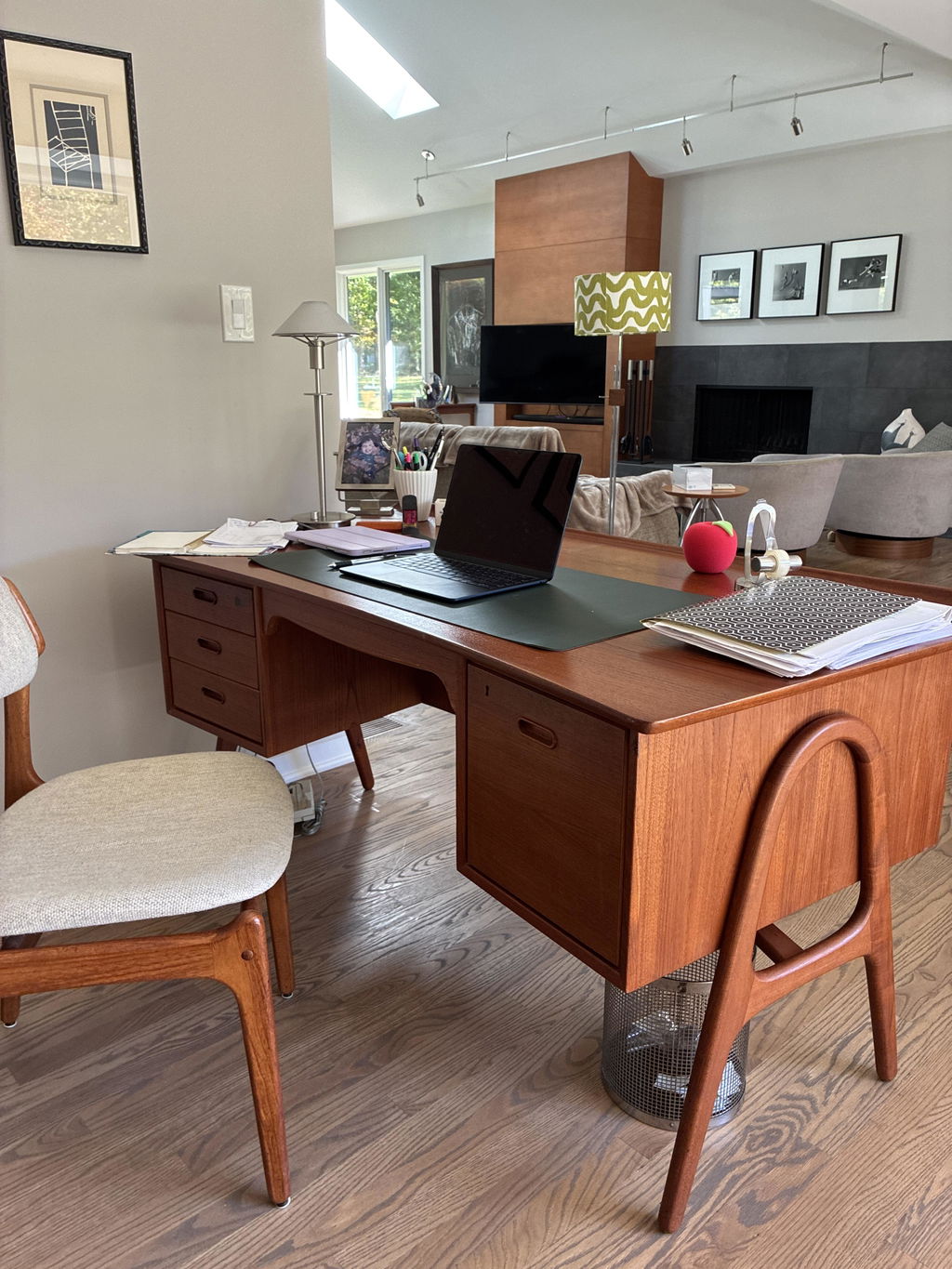
Clearcoat is a clear or tinted finish that sits on top of the wood and lets the grain show through. It's the right call when a piece has figured veneer, book-matched grain, or a wood species worth seeing — mahogany, walnut, rosewood. Once you paint over that, it's gone for good. Clearcoat also builds up in thin, hard coats that can be buffed to a deep sheen, which is part of why so much genuinely good mid-century casegoods left the factory clearcoated rather than painted.
When paint is the better restoration, not just the prettier one
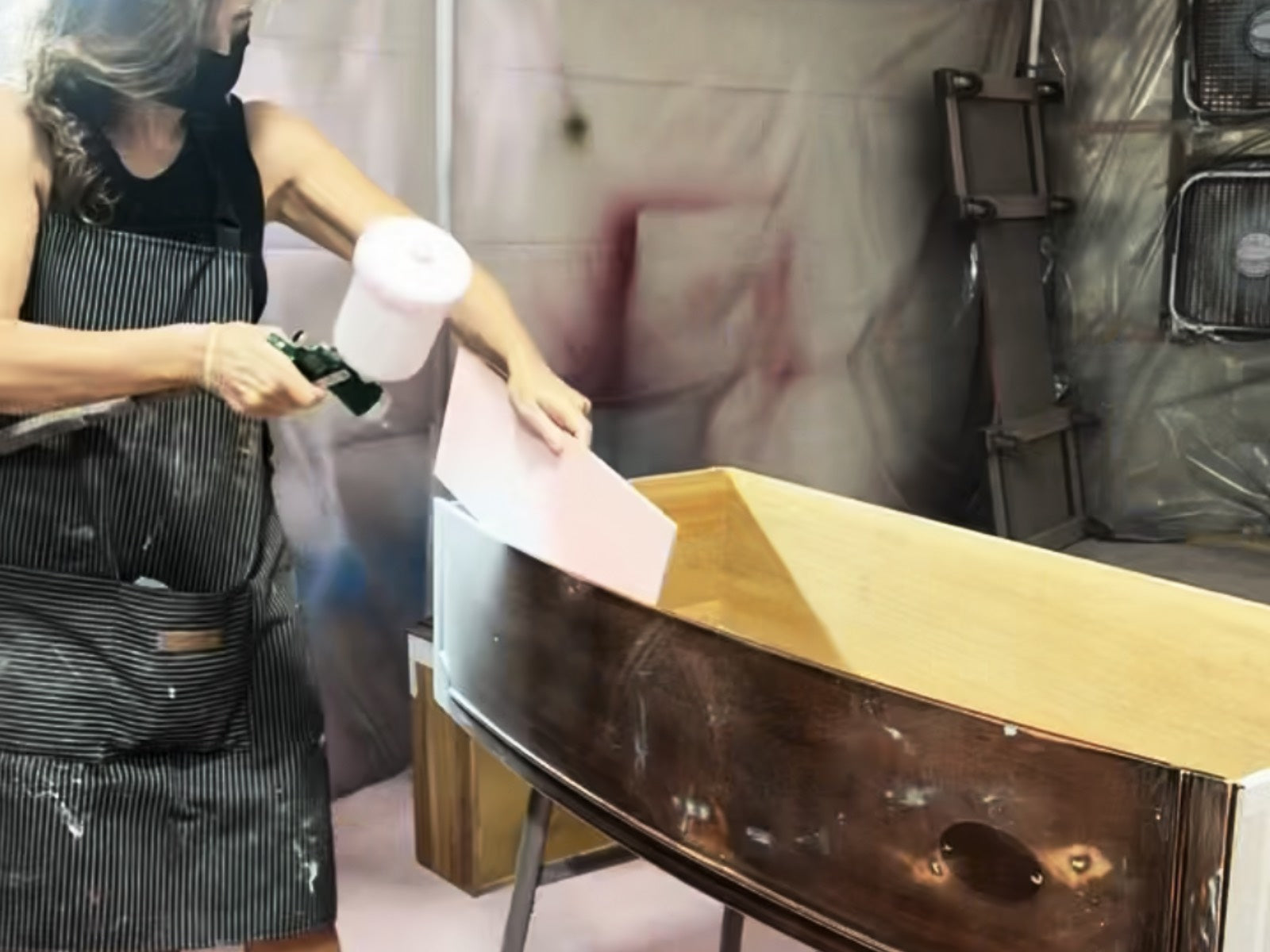
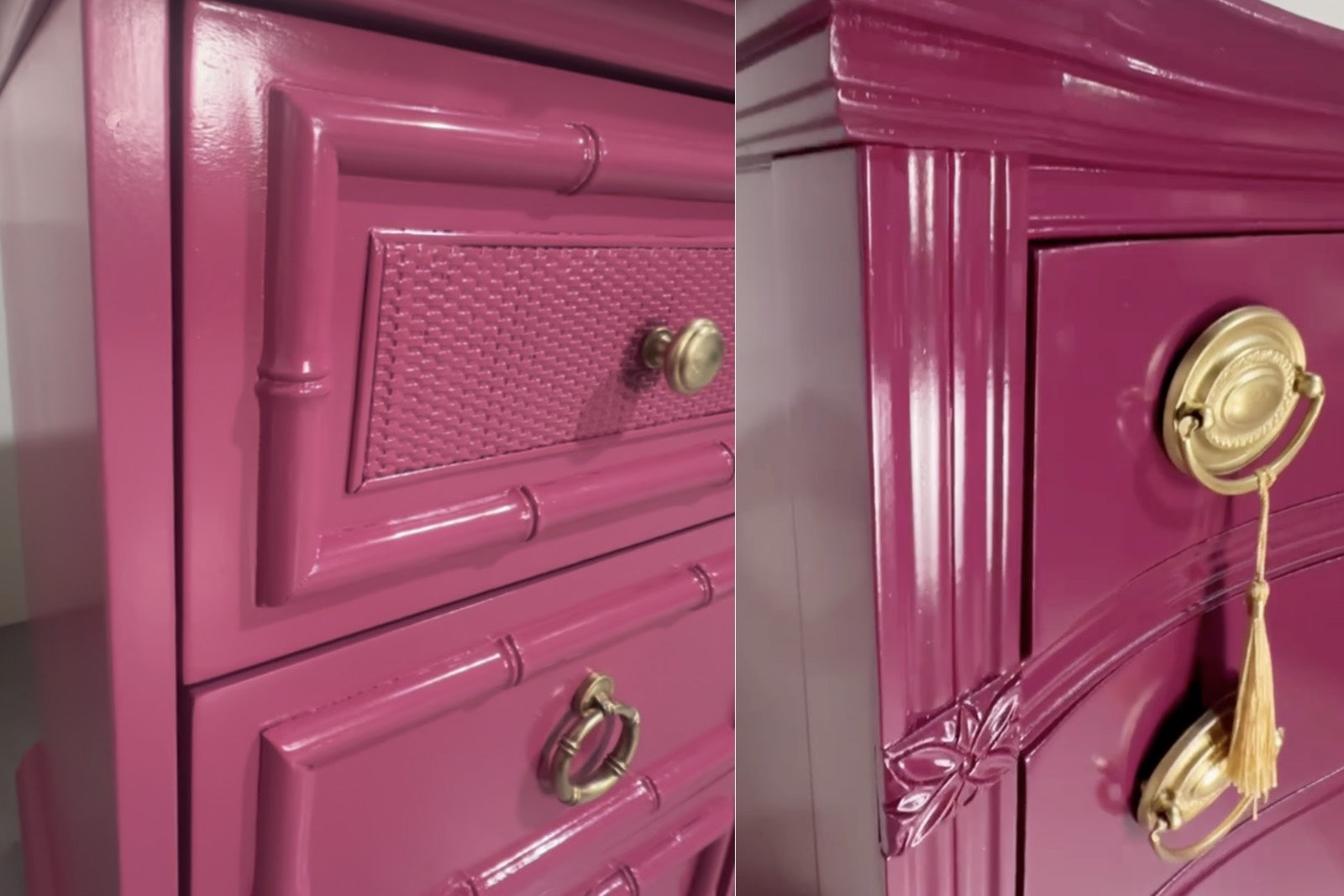
Paint isn't a cover-up for a piece that "didn't make it." It's often the more honest choice. A lot of case pieces, especially from the 1960s–80s, were built from a mix of solid wood and veneered composite — perfectly sound construction, but not wood anyone was trying to showcase. Paint also does real structural work: it fills small surface imperfections, evens out old touch-up repairs, and gives a piece a second life in a color story that fits how people actually decorate now.
How we decide, piece by piece
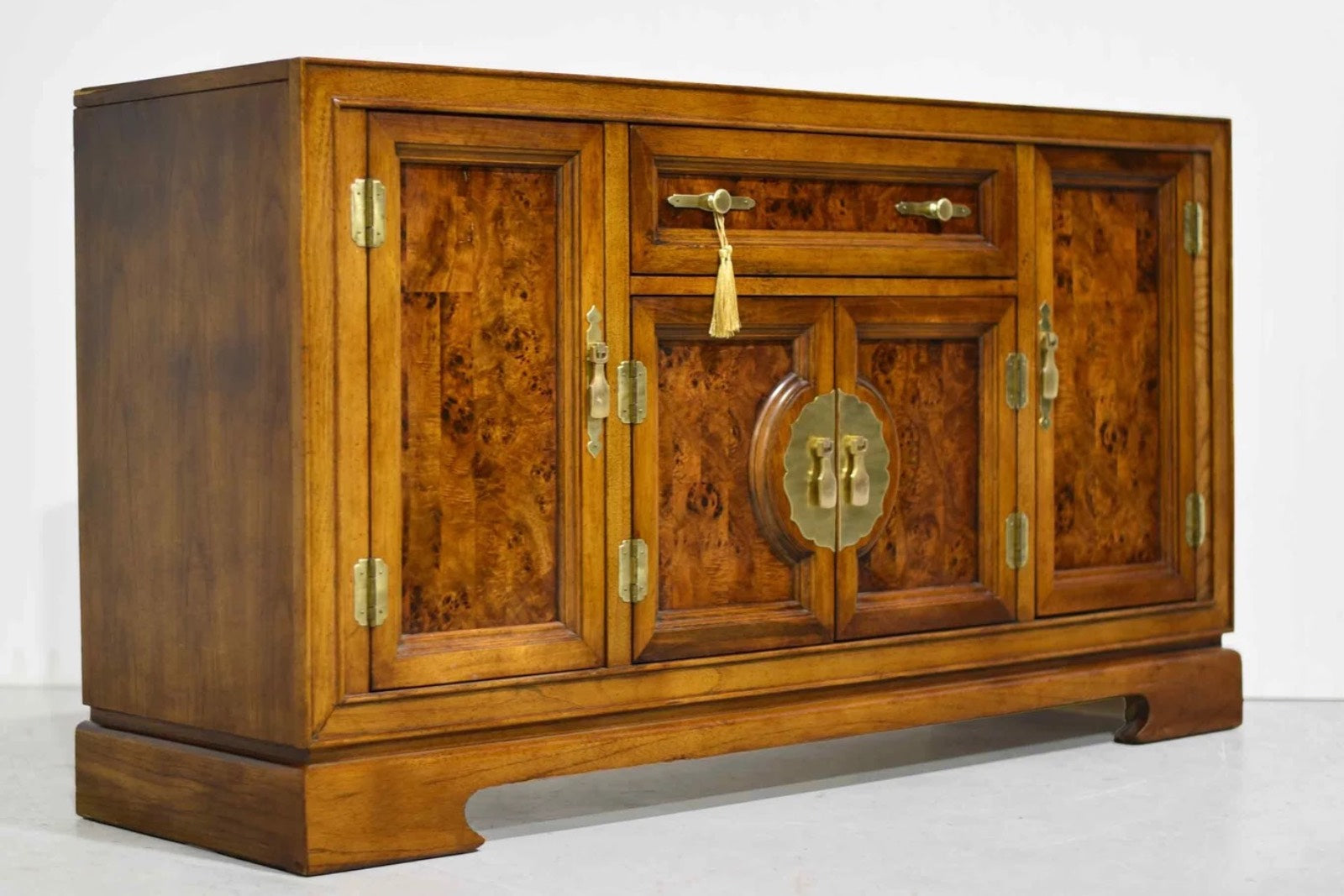
- Check the veneer first. If it's a fine, consistent veneer with strong grain and no major damage, that's a case for clearcoat — you'd be hiding the piece's best feature under paint.
- Look at the substrate. Solid wood with even color can go either way. Mixed veneer-and-composite construction usually points to paint.
- Assess existing damage. Deep gouges, mismatched old repairs, or heavy staining are often easier to solve well with paint than to disappear under a clear finish.
- Think about the room it's going into. A high-traffic piece — a console taking daily bag drops, a kids' room dresser — often does better long-term in a durable painted finish than a delicate clearcoat.
Durability: what to actually expect from each
Both finishes, done properly, hold up for decades. Clearcoat is more scratch-resistant out of the gate but shows white heat rings and water marks more readily, since you're looking straight through it to the wood. Paint is more forgiving of everyday wear and touches up more easily if it ever gets a chip, since you're matching a solid color rather than trying to blend into grain.
A note for designers
When you're sourcing for a client, the paint-or-clearcoat call is really a brief in disguise — ask what the piece needs to survive (kids, pets, daily use) and whether the room wants a statement of color or a quieter, more textural wood tone, and the right finish usually declares itself before you've even discussed budget.
Firebird Furniture restores and refinishes vintage casegoods by hand in Northbrook, Illinois, choosing paint or clearcoat based on what each piece actually needs — not just what's faster.