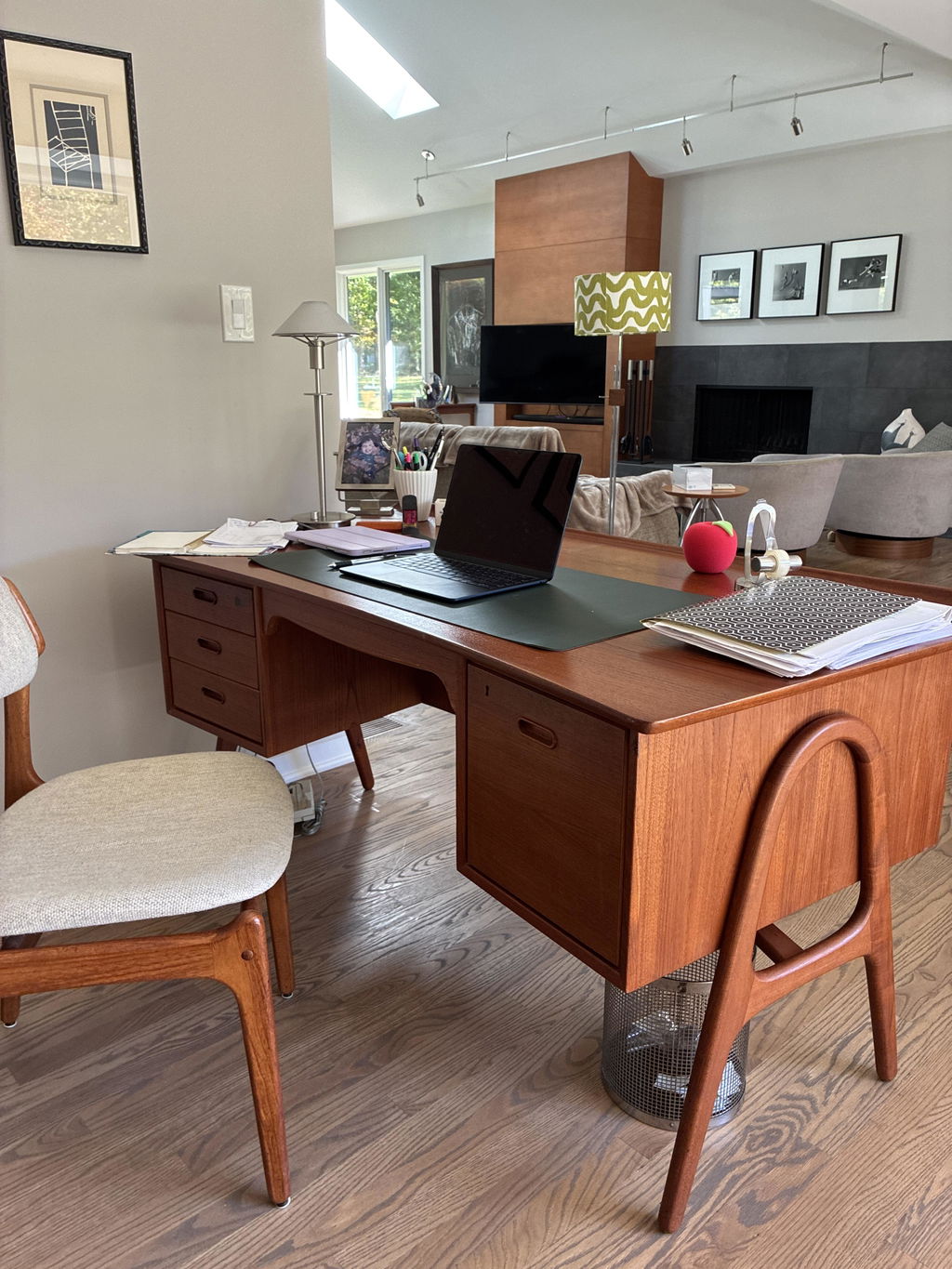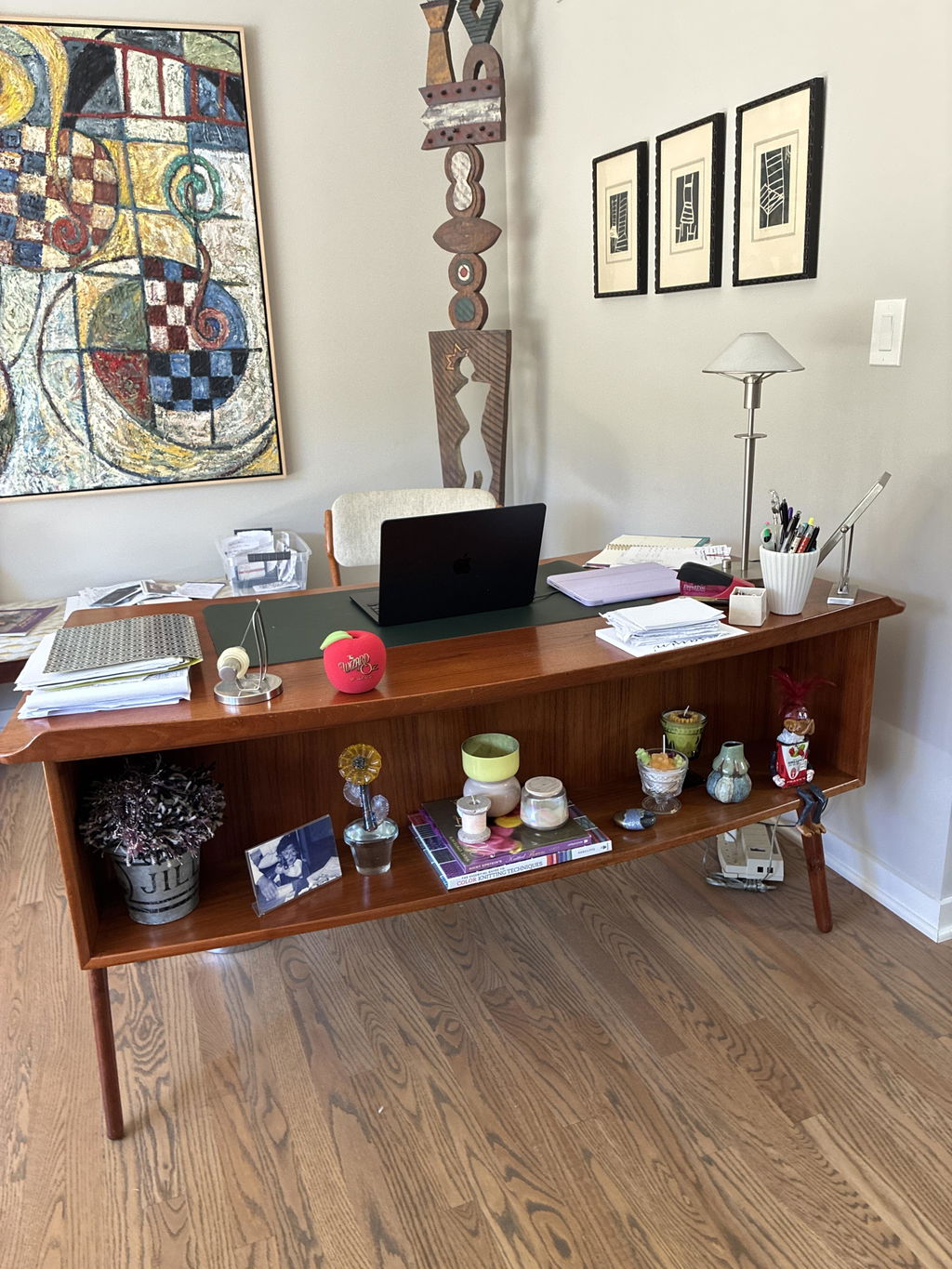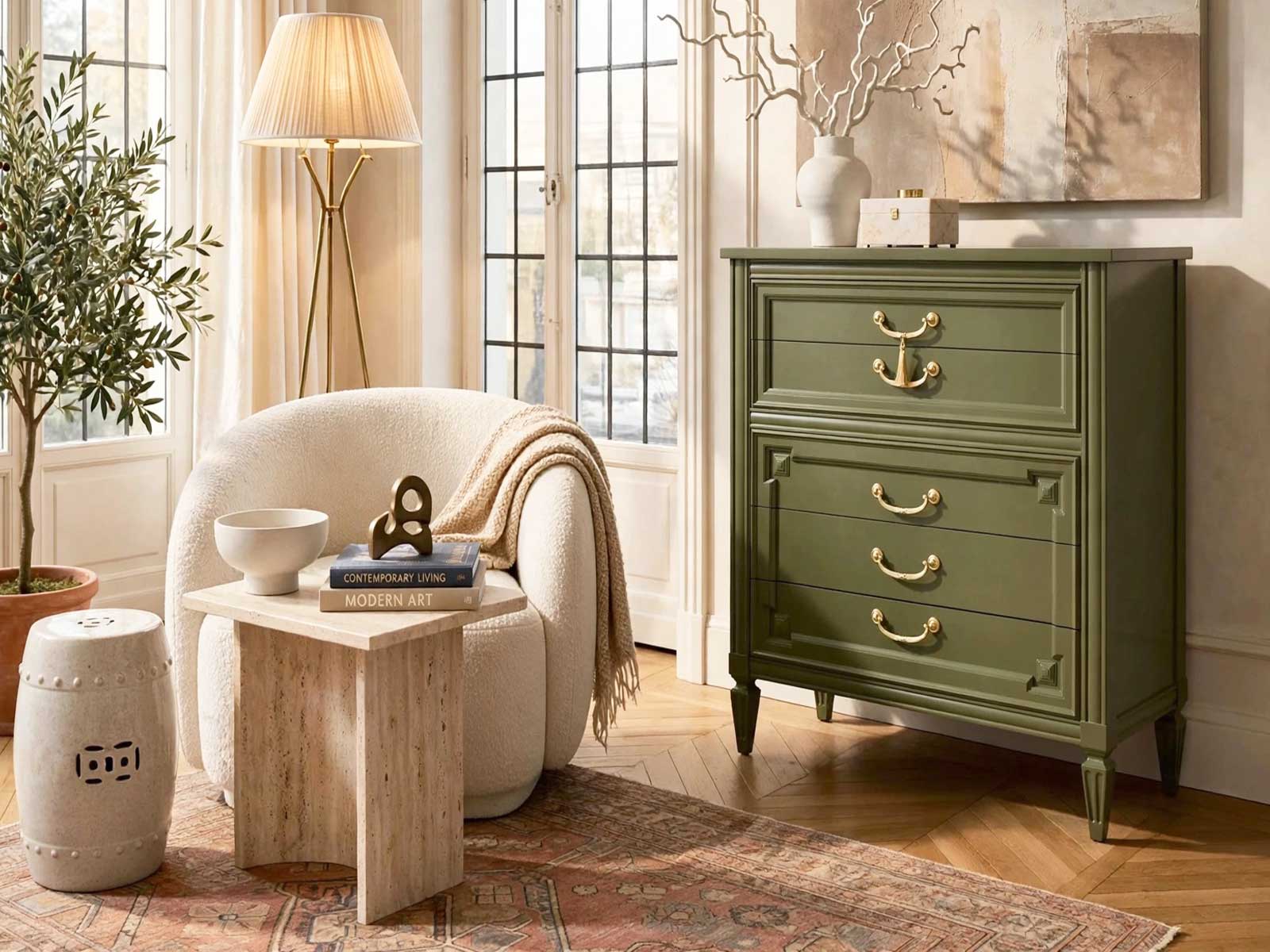
The best rooms mixing vintage and modern don't look like a deliberate design exercise — they look like they just happened that way over time. Getting there takes a bit more intention than it looks like from the outside, though. Here's how to do it so the mix reads as confident rather than accidental.
"A room that mixes eras well doesn't announce the mixing — it just feels like one person's taste, expressed over time."
Start with one anchor, not a theme
The most common mistake is trying to balance vintage and modern evenly throughout a room, piece by piece. It almost never works that way in rooms that actually feel good to be in.
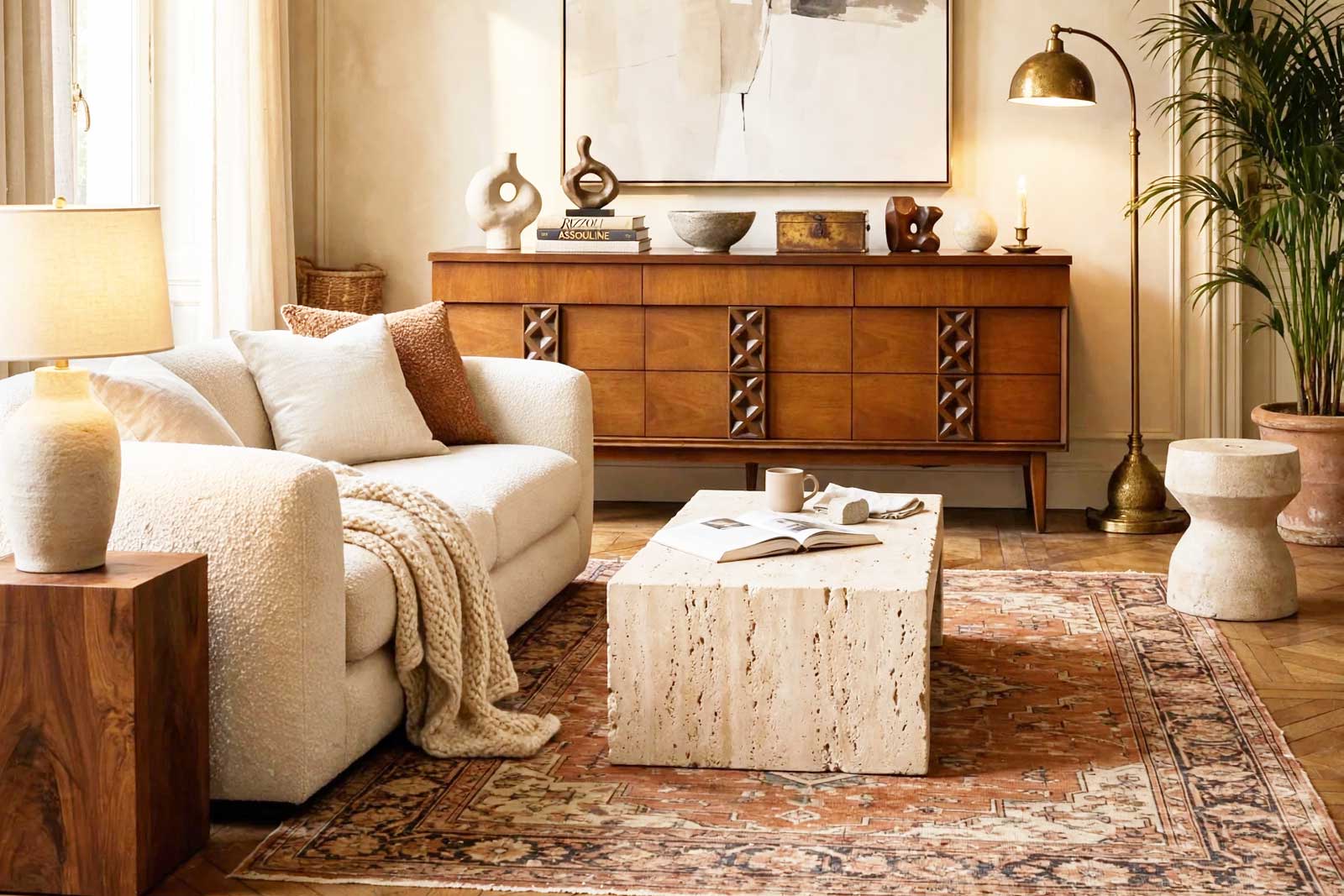
Pick one strong vintage piece — a credenza, a dresser, a striking chair — and let everything else in the room be genuinely modern and restrained around it. The vintage piece gets to be the star; the modern pieces support it rather than compete with it.
Match weight, not era
Pieces from wildly different decades sit together more comfortably than you'd expect, as long as their visual weight is similar. A substantial mid-century credenza pairs better with a chunky modern sofa than with a delicate glass-and-chrome coffee table — the eras don't need to match, but the scale and heft usually should.
This is often more useful than trying to match style periods directly: think in terms of light vs. heavy, ornate vs. plain, rather than 1960s vs. 2020s.
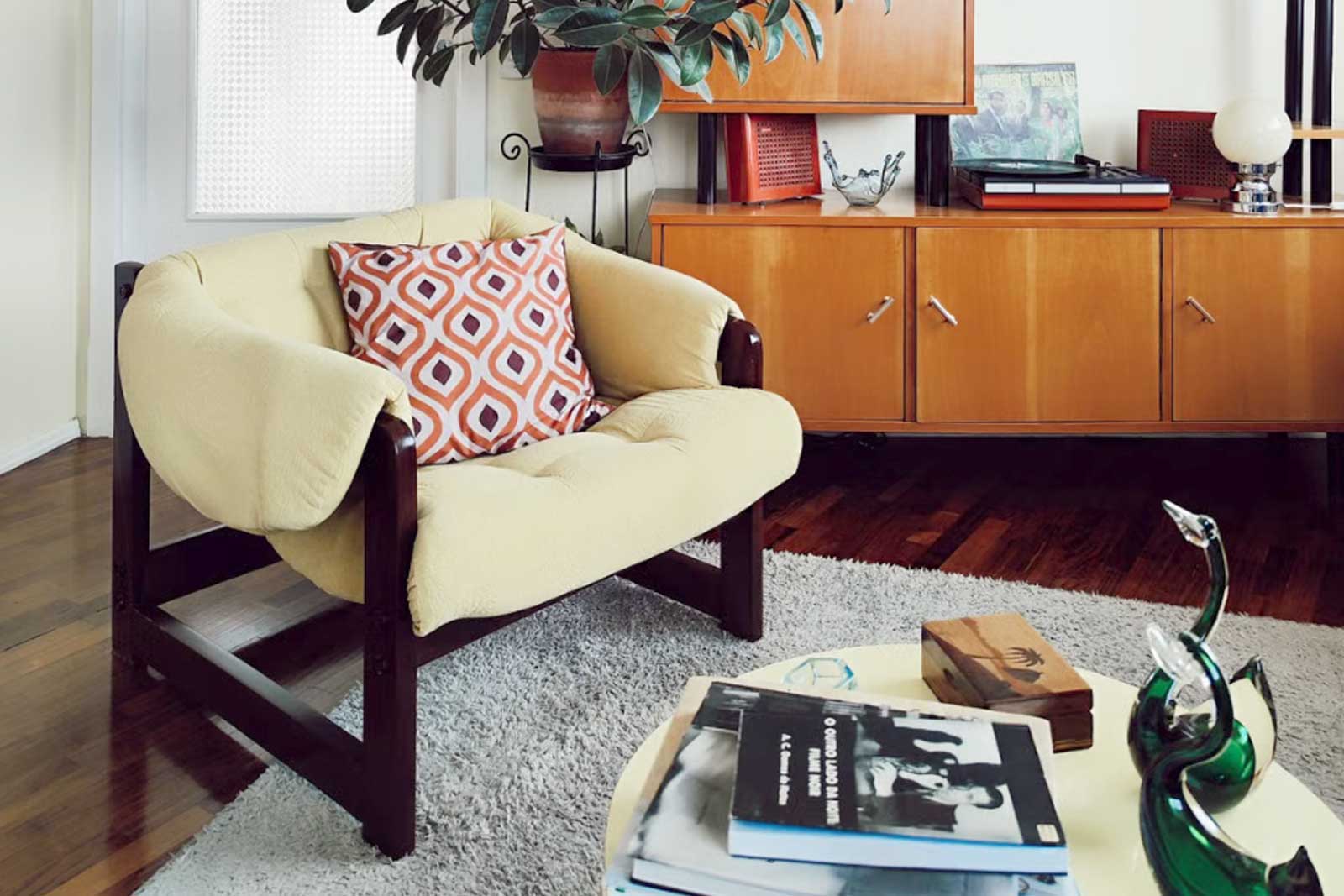
Let color do the unifying work
When pieces come from different eras, a shared color thread — even a subtle one — reads as intentional rather than accidental. Pull one tone from your vintage piece's finish or hardware (a brass tone, a wood stain, a fabric color) and repeat it once or twice elsewhere in the room.
This is a much lighter touch than full color-matching, and it's usually the single fastest way to make an eclectic room feel pulled together rather than randomly assembled.
Give the vintage piece room to breathe
Overcrowding is the fastest way to make a mixed room look cluttered rather than curated. A striking vintage piece needs negative space around it to actually register as a statement — surround it with too much else and it just becomes one more thing in a busy room.
Resist the urge to "modernize" everything else
You don't need every other piece in the room to be strictly contemporary for the mix to work. A few more vintage or antique pieces are fine, as long as they're not all fighting for the same visual attention as your anchor piece. The goal is one clear hierarchy, not a strict 50/50 split.
A note for designers
Clients often ask for "a mix of old and new" without a clear sense of what that actually means in practice — this is usually the moment to steer the conversation toward one anchor piece and a supporting cast, rather than trying to balance every element evenly. It's an easier brief to execute and a more coherent result to hand off.
Firebird Furniture sources vintage anchor pieces built to hold their own in a modern room.