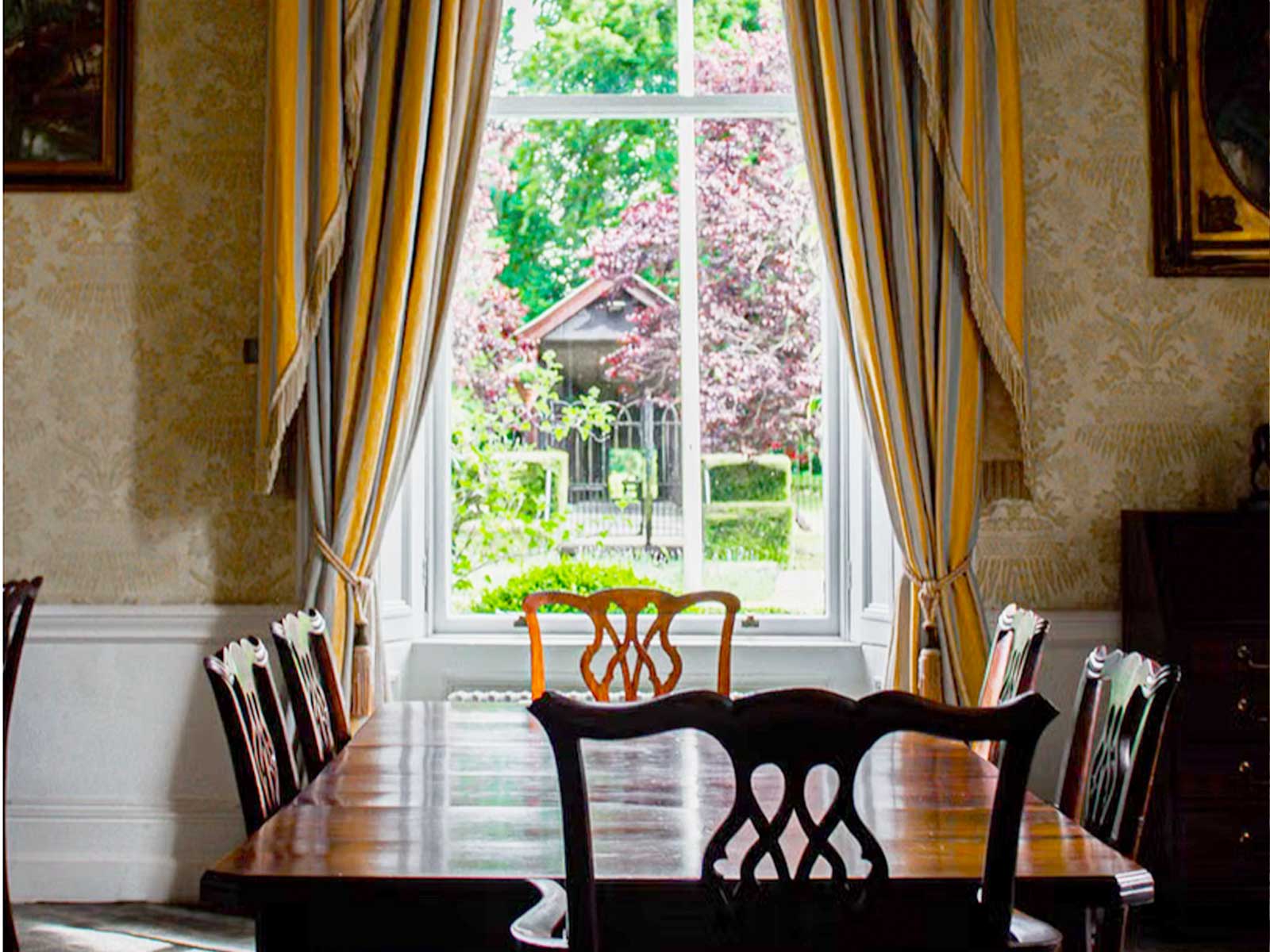
If you spend a bit of time in Dublin, you'll notice it in the small things first — a neighbor's hallway table that's clearly been in the family for three generations, a mantelpiece with a chip nobody's bothered to fix, a Georgian door with hardware nobody's swapped out. Irish interiors, at least the ones that feel genuinely lived-in rather than showroom-styled, tend to hold onto things. That instinct is worth paying attention to right now.
"An Irish home rarely looks 'finished' in the way a new-build show home does — and that's exactly the point."
Why vintage sits so naturally in Irish homes
A few things about Irish housing stock and culture make this a genuinely good fit, not just a trend borrowed from elsewhere:
- The housing stock itself is old. Georgian, Victorian, and cottage-era homes make up a huge share of what people actually live in, especially in and around Dublin — rooms built with proportions and mouldings that period-appropriate or vintage furniture simply sits better in than flat-pack new pieces do.
- There's a cultural comfort with "worn," not just "old." A scuffed leg or faded upholstery reads as history here more than as a flaw — a different sensibility than the pursuit of pristine-new that shows up elsewhere.
- Family pieces carry real weight. Inherited furniture isn't treated as a stopgap until you can afford something new — it's often the anchor piece a room gets built around.

What this looks like in practice
Mixing eras without apology. A Georgian side table next to a mid-century lamp next to a contemporary sofa isn't seen as clashing — it's seen as a room that's evolved honestly over time, which is closer to how most Irish homes actually get furnished anyway.
Painted furniture has deep roots here. Hand-painted dressers and presses are a genuine part of Irish country furniture tradition, not a modern styling trick — which makes Paint to Order pieces feel less like a novelty and more like a continuation of something familiar.
Practicality over precious. Furniture gets used, not preserved behind velvet rope — a well-loved kitchen table with real wear tells a better story than one that's never seen a scratch.

What you can find here that you can't find elsewhere
Ireland's auction and dealer scene turns up categories that simply don't show up the same way in American or even broader European markets:
Irish country furniture. Painted dressers, settle beds, and creamware presses built by regional makers rather than large manufacturers — genuinely distinct from English or French country pieces, and rarely exported in any volume.
Georgian-era pieces with real local provenance. Dublin's Georgian architectural boom left behind furniture built specifically for those proportions — tall, narrow hall pieces and fanlight-adjacent mirrors that were made for houses like the ones still standing on Merrion Square and Fitzwilliam Street.
Ecclesiastical and institutional pieces. Ireland's church and convent closures over the past few decades have quietly released a steady stream of well-built, unusual furniture — choir stalls, vestment presses, refectory tables — that rarely surfaces on the general antiques market elsewhere.
Donegal and West of Ireland tweed-era pieces. Furniture tied to the wool and weaving trade — bobbin-turned chairs, sturdy work tables — carries a specific regional character that's genuinely hard to source outside the country.