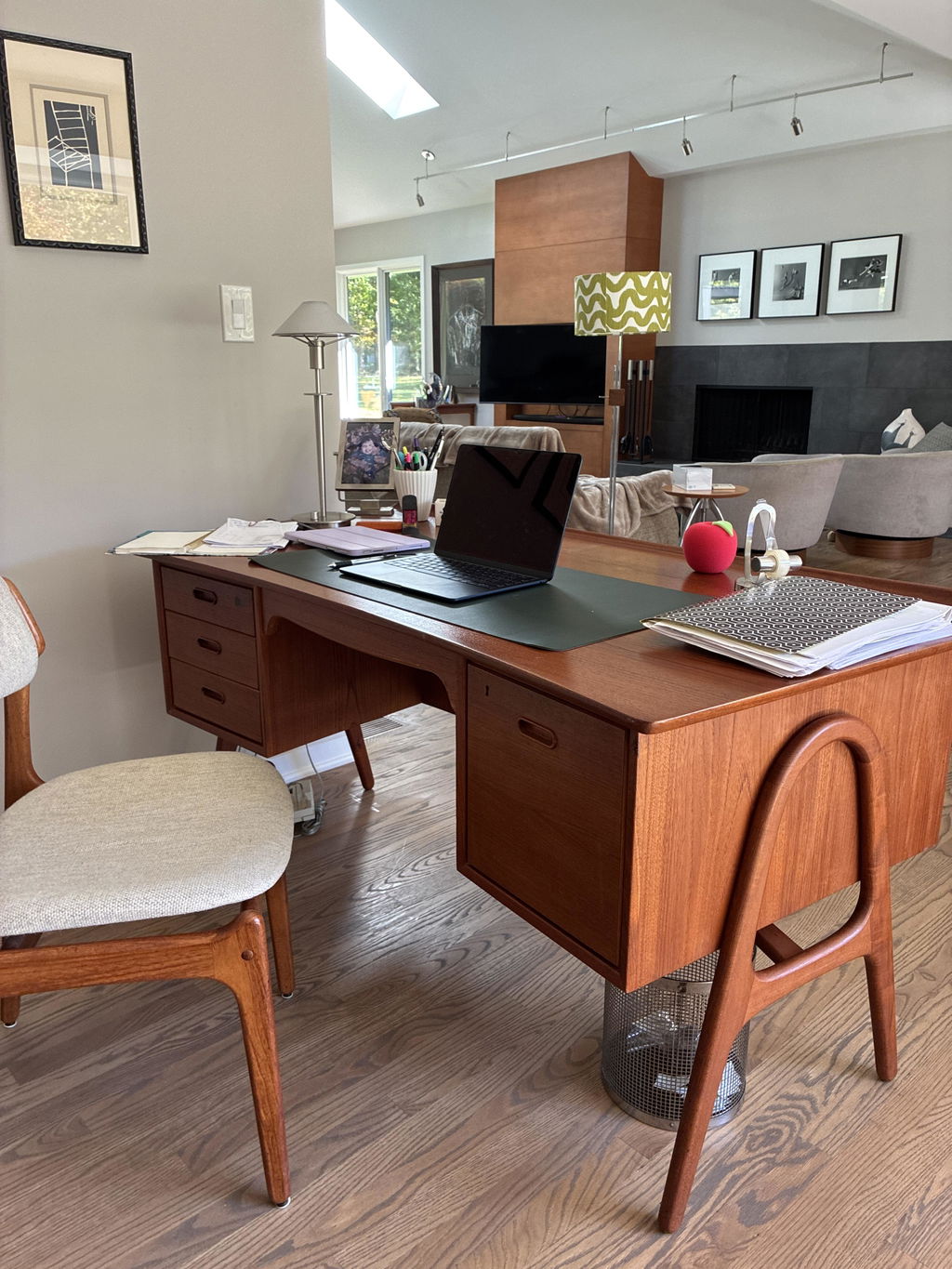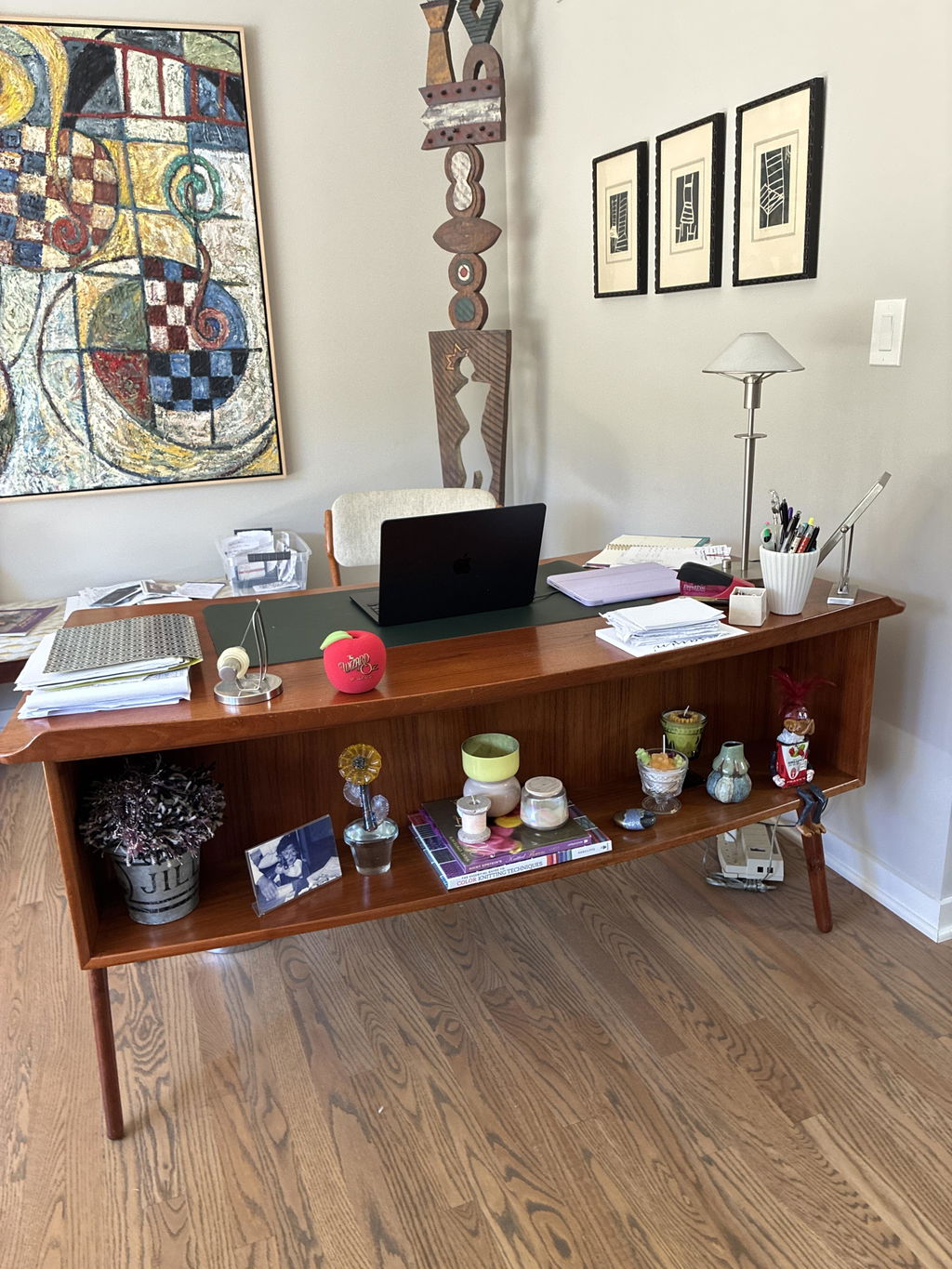
Every piece of vintage furniture is quietly telling you its age, if you know where to look. Long before you check a maker's label or search a stamped number, the wood, the joinery, and even the hardware are giving away the decade a piece was built. Learning to read these clues turns furniture shopping from a guessing game into something closer to detective work — and it's one of the most useful skills a buyer can pick up before their next estate sale or flea market trip.
The best clues to a piece's age were never meant to be clues at all — they're just how furniture used to be made.
Start with the joinery
Flip a drawer over or open a cabinet door and look at how the pieces are actually held together. Furniture made before the mid-20th century relied on hand-cut joints, while anything mass-produced from the 1950s onward tends to show more uniform, machine-cut construction. The seams tell a story long before the finish does.
- Dovetail joints. Hand-cut dovetails are slightly irregular in spacing and width — a sign of pre-industrial or early-industrial craftsmanship. Machine-cut dovetails, common from the 1890s onward, are perfectly even.
- Drawer construction. Solid wood drawer bottoms set into grooves suggest an older piece; plywood or hardboard bottoms point to mid-century or later manufacturing.
- Screws and nails. Hand-forged nails and irregular slotted screws suggest 19th-century work. Perfectly uniform Phillips-head screws weren't widely used until after the 1930s.
Read the wood itself
The type of wood and how it was used can narrow a piece down to a specific design era. Solid mahogany and walnut dominated furniture-making through the 1800s, while the mid-century period leaned heavily on teak, walnut veneer, and — later — laminate as manufacturers looked for lighter, more affordable materials.
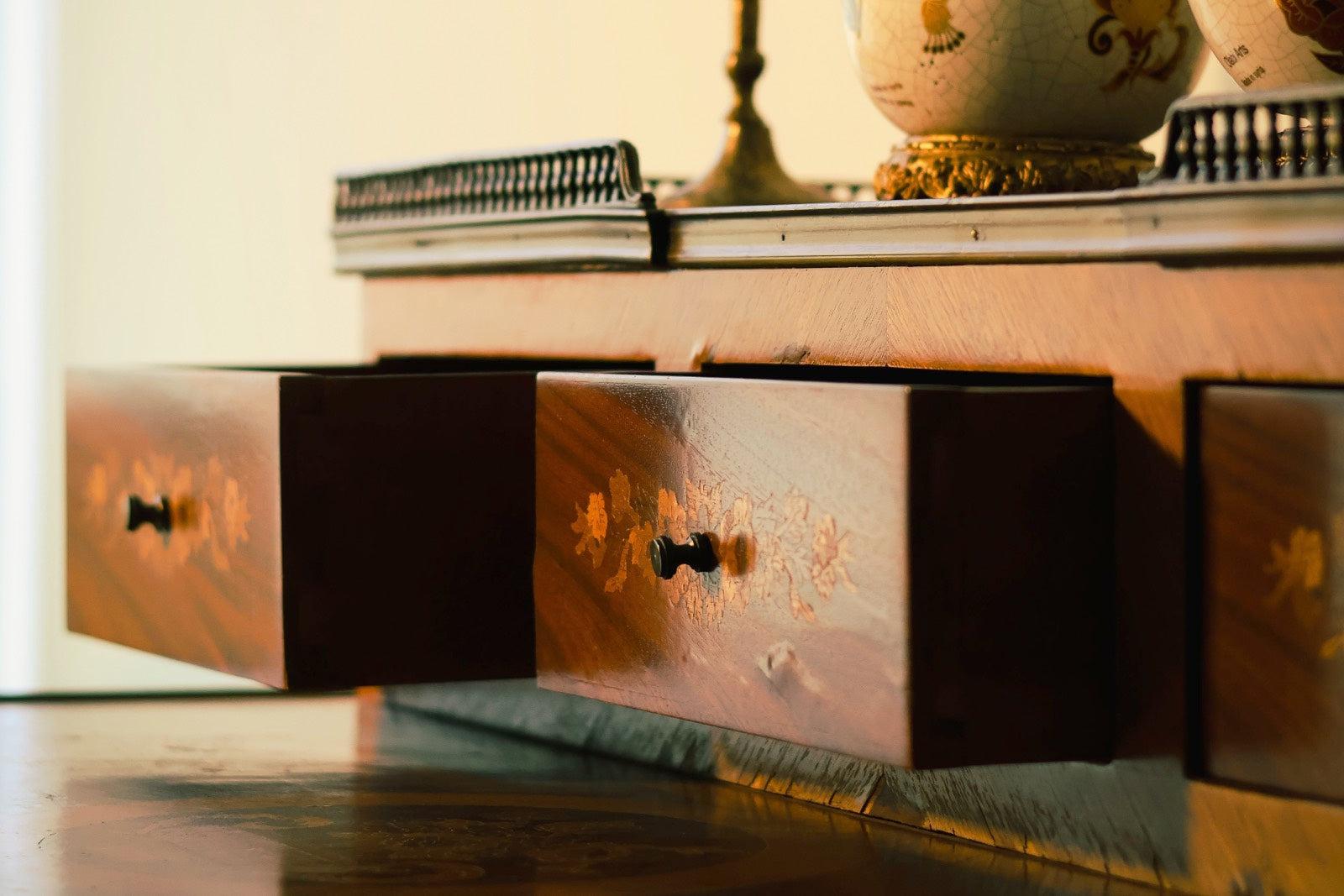
- Veneer patterns. Book-matched veneer, where the grain mirrors itself across a surface, became especially popular in Art Deco and mid-century pieces from the 1920s through the 1960s.
- Saw marks. Circular saw marks on unfinished or hidden surfaces (like the underside of a tabletop) indicate later production; straight, irregular marks suggest an older hand or pit saw.
Check the hardware and finish
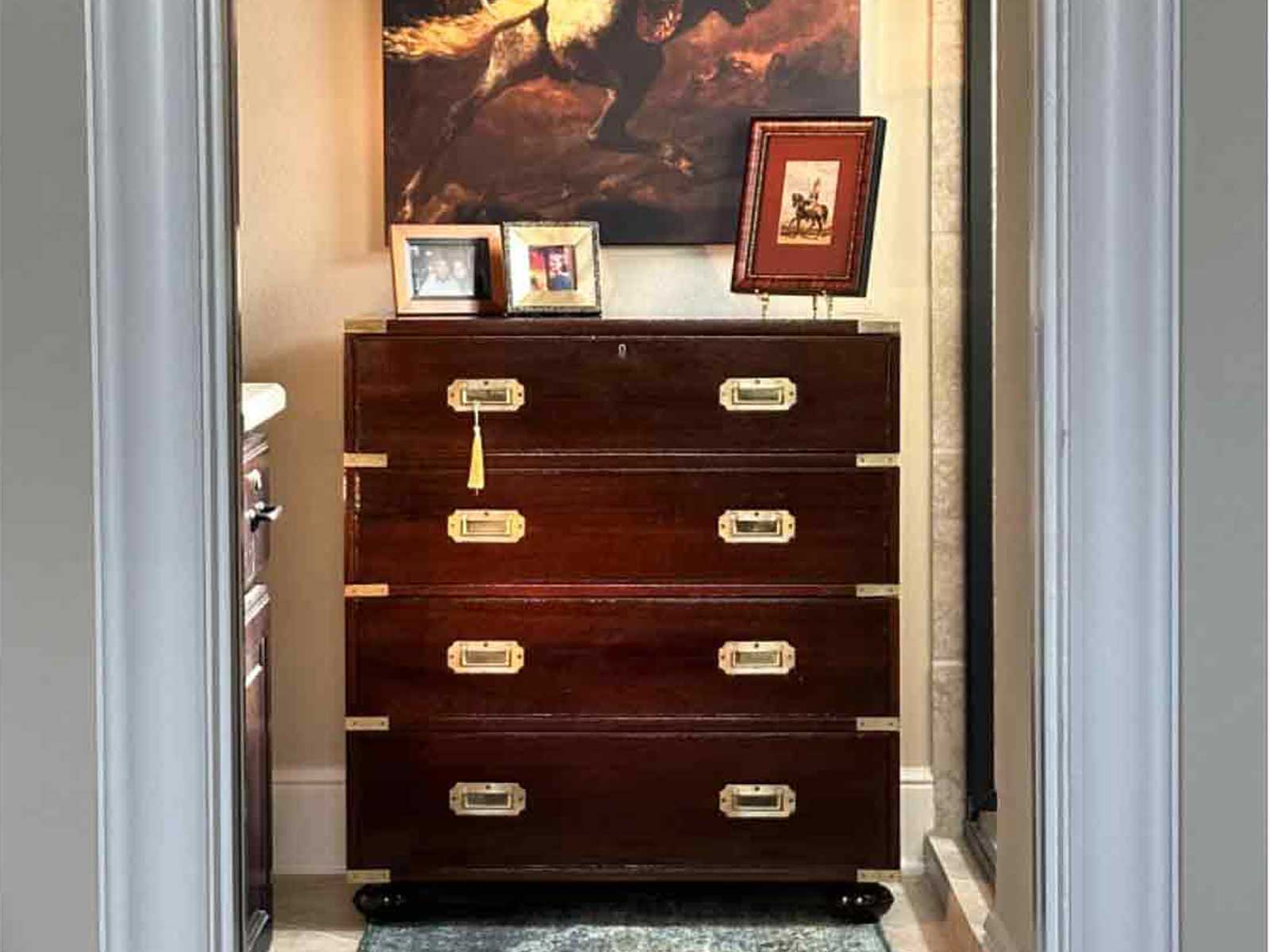
Drawer pulls, hinges, and casters evolve in style much faster than the furniture itself, which makes them one of the fastest ways to date a piece at a glance. A dresser with sleek brass sculpted pulls and tapered wood legs is almost certainly mid-century; ornate cast pulls with floral detailing point to an earlier revival style.
- Hinges. Butt hinges with visible screw holes are common on older furniture; concealed, self-closing hinges didn't become standard until the mid-20th century.
- Finish. A thick, uneven shellac finish suggests hand-applied work from before the 1920s. A smoother, sprayed lacquer finish points to more modern manufacturing methods.
Look for maker's marks and labels
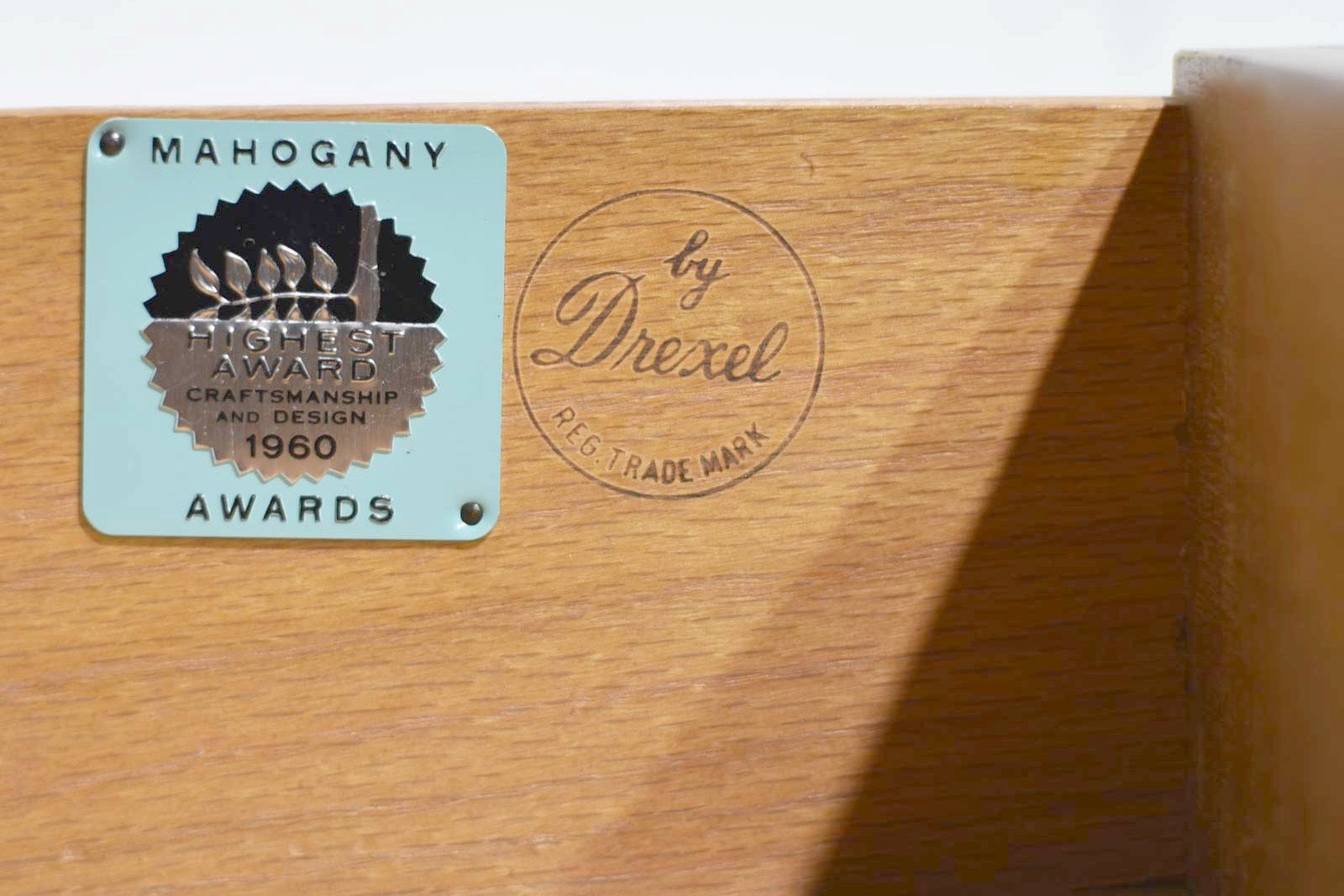
Once the construction clues have you in the right decade, a label, stamp, or brand can confirm the rest. Check the back panel, the underside of drawers, and the inside of case pieces — manufacturers like Henredon, Drexel, and Dixie often stamped or stenciled model numbers that can be cross-referenced against catalog archives.
- Paper labels. These are fragile and often missing, but when present they can pinpoint an exact manufacturer and sometimes a production year.
- Burned-in or stamped marks. More durable than paper labels and common on solid wood case pieces from the early-to-mid 20th century.
A note for designers sourcing for clients
When a client asks whether a piece is "authentically" vintage or simply styled to look that way, these construction details are your proof points. Being able to point to hand-cut dovetails or a period-correct veneer pattern doesn't just satisfy curiosity — it justifies the piece's place (and price) in a considered room, and gives you language to explain its value beyond "it just looks old."
Firebird Furniture sources, restores, and hand-finishes vintage pieces with an eye for the details that make each one worth keeping.