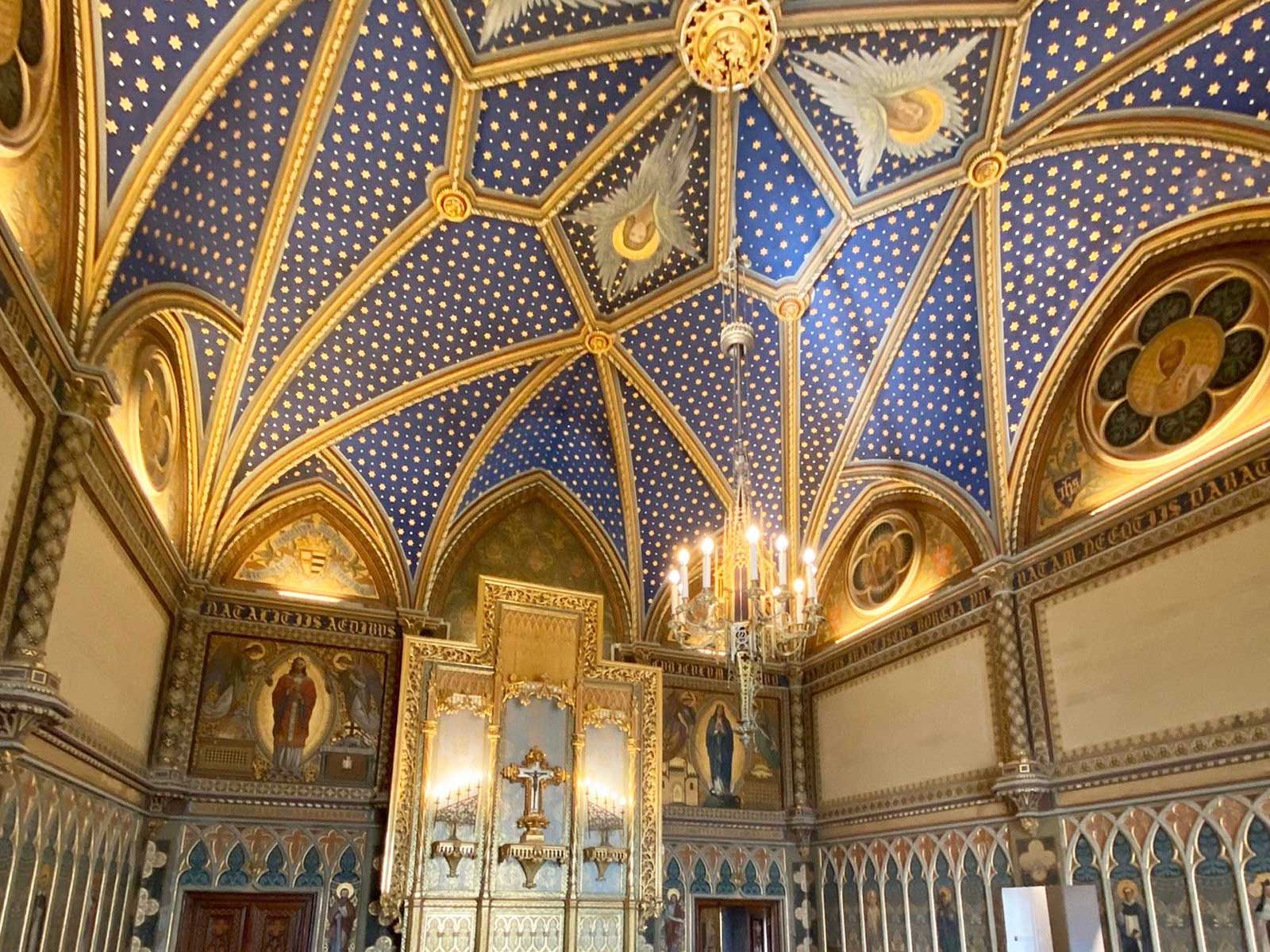
I wasn't expecting a palace in a small Spanish coastal town to stop me in my tracks the way it did — but the Ducal Palace of Gandía has a kind of layered history you can actually feel room to room, and it shows up in the furniture as much as the architecture. I brought a camera through the whole visit, and I keep coming back to a handful of pieces that I think about differently than most of what I source.
"You can date a room by its furniture almost as reliably as by its architecture — this palace has both, layered on top of each other for six centuries."

A quick history, because it matters for the furniture
The palace was the residence of the Royal Dukes of Gandía from the 14th century, and from 1485, the Borja family — the same family better known in English as the Borgias. It was also the birthplace of Saint Francis Borja. The oldest sections date to the 15th century in Valencian Gothic style, though much of what you walk through today reflects a later restoration into a sanctuary. That gap — Gothic bones, Baroque finish — is exactly what makes the interiors so interesting to look at with a furniture eye.
- The Golden Gallery (Galeria Dorada) is full Baroque — ornate, gilded, and built for display rather than daily use. The furniture here reads as ceremonial.
- The Crown Hall (Salón de Coronas) has a different weight to it entirely — more formal, more architectural, the furniture practically part of the room's structure.
- The oldest Gothic sections feel almost bare by comparison — a reminder that "furniture" as we think of it now is a relatively late layer on a much older building.

What stood out, piece by piece
Scale as a design tool. Palace furniture is built for rooms with genuinely enormous ceiling heights, and the proportions do work most of us never have to think about — a console or cabinet that would dominate a normal room reads as correctly sized the moment you see the space it was built for.
Gilding used as structure, not just decoration. In the Golden Gallery especially, gold leaf isn't a finish applied on top of the piece — it follows and emphasizes the actual carved form underneath, which is a very different design logic than a painted or lacquered piece where color sits more independently of shape.
Restoration is visible if you look for it. Centuries of ownership and use mean almost nothing is in its "original" state exactly — which is oddly reassuring as someone who restores and repaints vintage pieces for a living. Even palace furniture has a maintenance history.

Why this matters for how I think about sourcing
Seeing furniture in a space it was actually built for — rather than staged in a shop or photographed against a plain wall — changes how you read proportion and intent. It's a good reset before sourcing trips: proportion, weight, and finish all read differently in context than they do in isolation.
Firebird Furniture's Field Notes series covers furniture and interiors encountered while traveling — not for sale, just worth sharing.