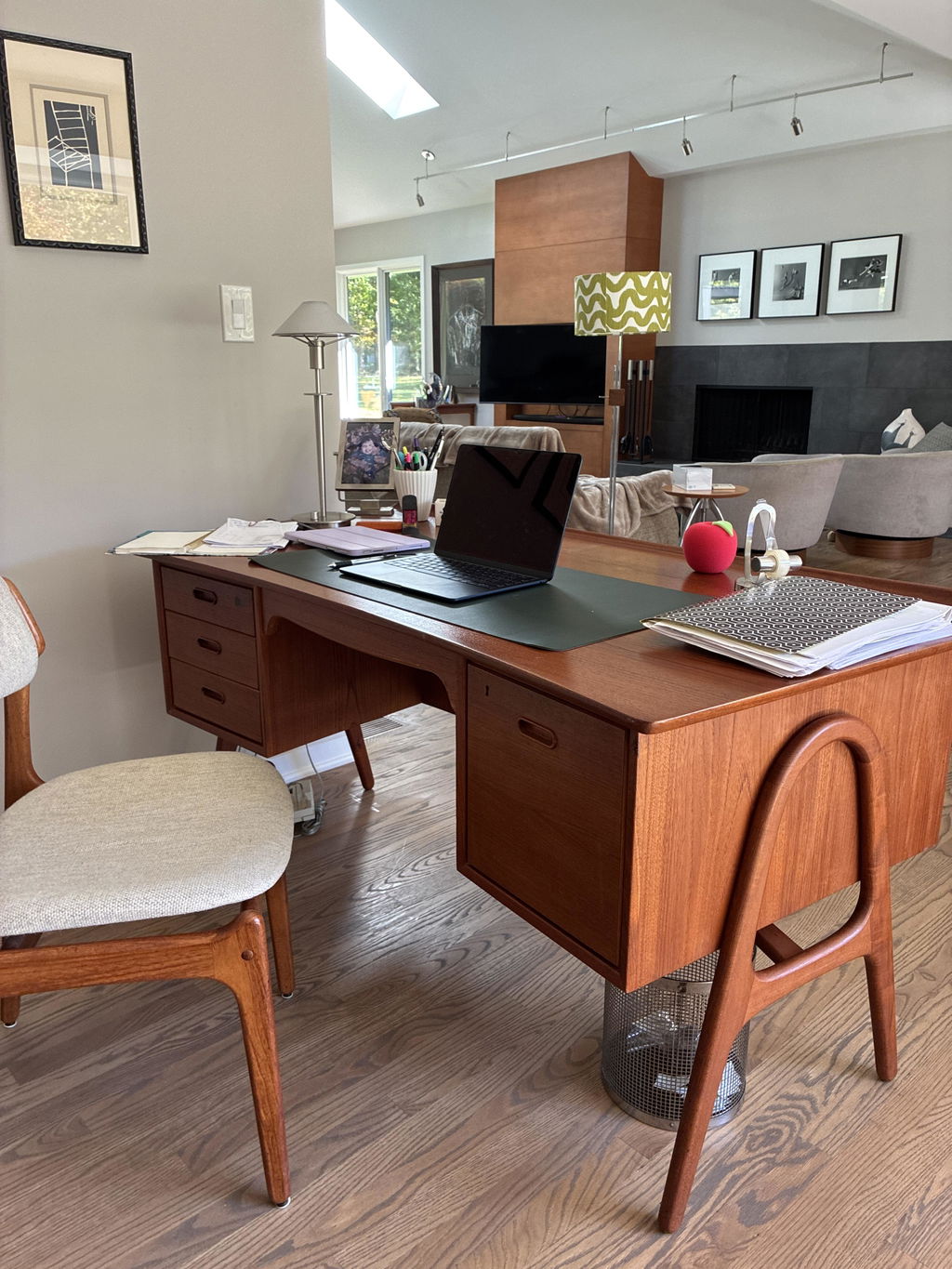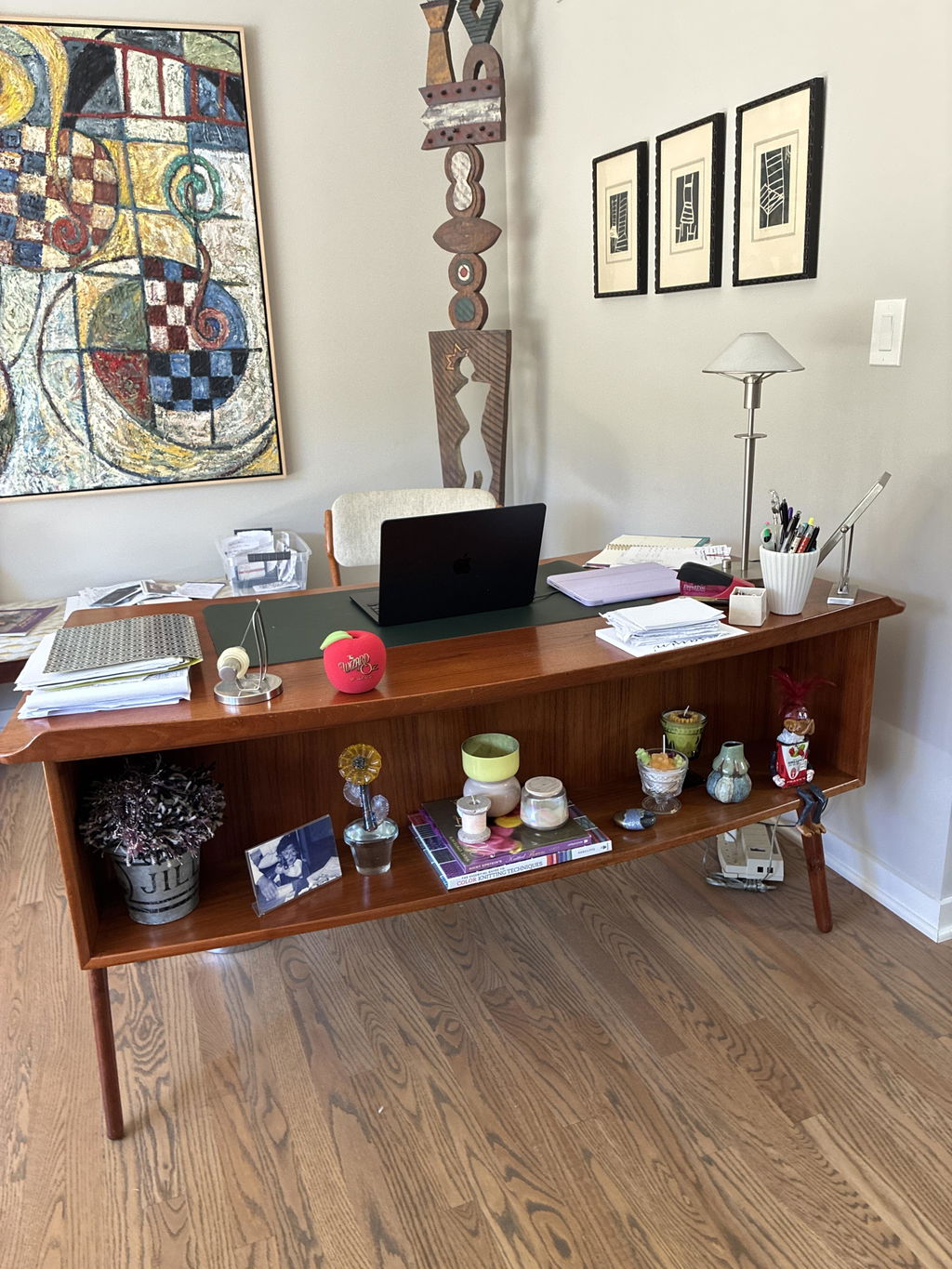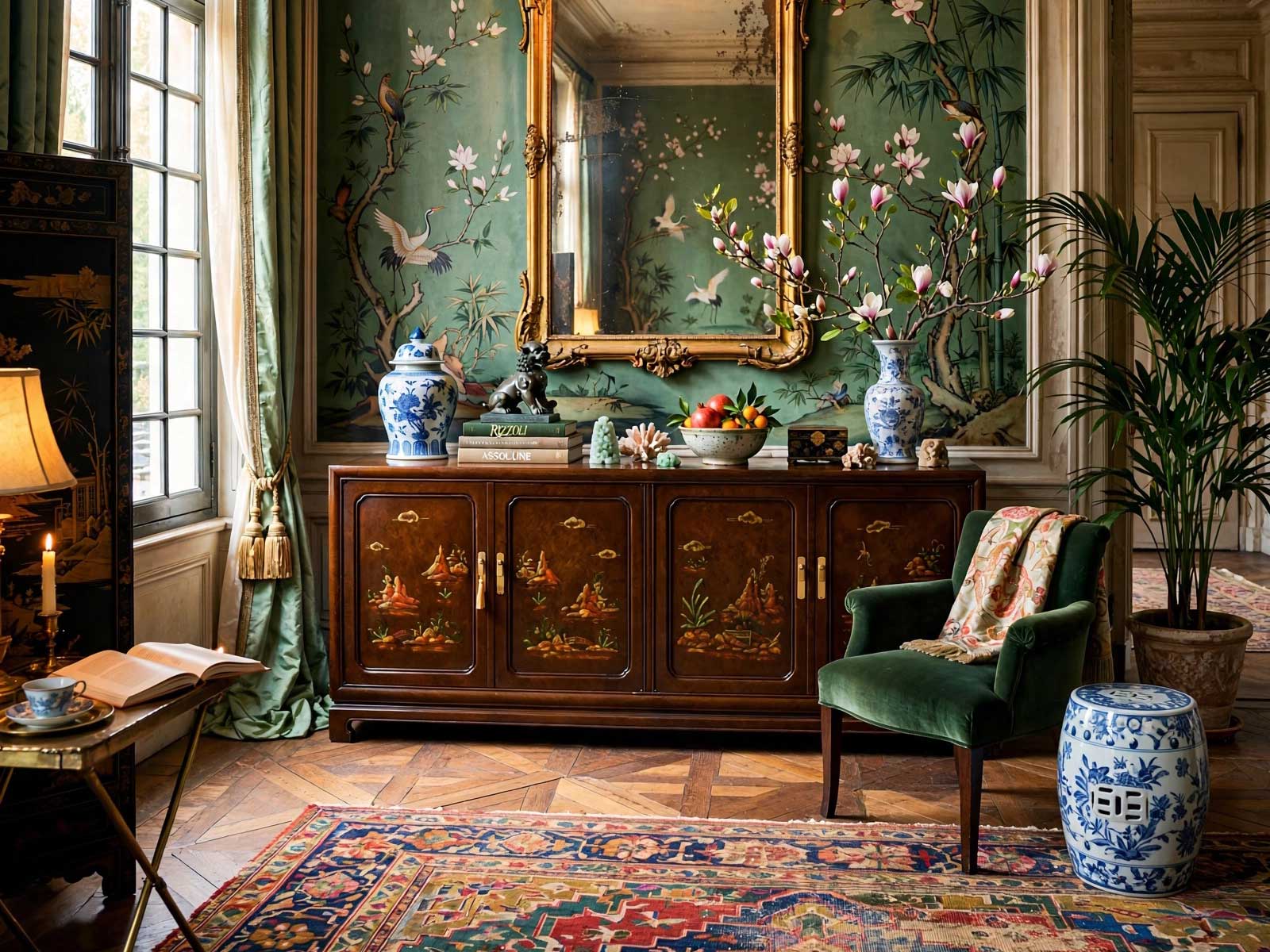
Chinoiserie furniture carries a lot of visual history — hand-painted florals, pagoda silhouettes, gilt accents, lacquered finishes. In a period dining room, that history does the work for you. In a modern one, it has to earn its place. The good news: a well-chosen Chinoiserie sideboard is one of the easiest antique pieces to integrate into a contemporary space, because the contrast is exactly what makes it work.
"A Chinoiserie piece in a modern room isn't there to match — it's there to be the one thing that doesn't."
Why the contrast works
Modern dining rooms tend toward restraint — clean lines, neutral palettes, minimal ornament. That restraint is exactly what makes an ornate Chinoiserie sideboard read as intentional rather than clashing:
- One statement piece, not a theme. A single Chinoiserie sideboard against plain walls and simple seating becomes a focal point instead of competing for attention.
- Pattern against negative space. Hand-painted scenes and florals need room to be seen — a busy, maximalist room actually mutes them, while a spare modern room lets the detail carry.
- Warm finishes soften hard lines. Lacquer, gilding, and aged brass hardware bring warmth that pure modern furniture (glass, steel, unadorned wood) often lacks on its own.

How to style it
Let the walls go quiet. A plain or single-tone wall behind the piece keeps the sideboard's detail from fighting with pattern or art. If you want wallpaper, choose a subtle texture rather than another busy print.
Keep the tabletop and seating simple. Pair the sideboard with an unadorned dining table and plain or lightly upholstered chairs — the room only needs one voice speaking in detail.
Repeat one motif, not the whole story. Pull a single color from the piece's palette (a jade green, a coral red, a gold tone) into one other element in the room — a rug edge, a vase, a single chair cushion — rather than trying to match the whole scene.
Style the top with restraint. A single sculptural object or a small stack of books reads as curated; a full tablescape competes with the painted surface. Let the sideboard's top breathe.
What to look for when buying
Hand-painted vs. printed. True vintage Chinoiserie pieces typically have hand-painted scenes with visible brushwork and slight asymmetry between panels; later reproductions often use printed or decal finishes that repeat identically. Both can look beautiful — but hand-painted pieces carry more value and more character up close.
Condition of the lacquer. Light crazing (fine surface cracking) is normal and often desirable on genuinely old lacquer — it signals authenticity rather than damage. Flaking, water rings, or heavy chipping are worth factoring into price or restoration plans.
Hardware originality. Original brass hardware, even when patinated, is usually worth preserving rather than replacing — it's part of what makes the piece read as authentic rather than staged.
A note for designers sourcing for clients
Chinoiserie sideboards are a strong choice for clients who want their dining room to feel collected rather than showroom-matched. Because the piece does most of the visual work on its own, it pairs well across a range of otherwise-neutral schemes — Scandinavian-modern, transitional, even fairly minimal spaces — without requiring the rest of the room to be built around it.
Firebird Furniture sources and restores vintage Chinoiserie furniture, including pieces available through our Paint to Order program.